
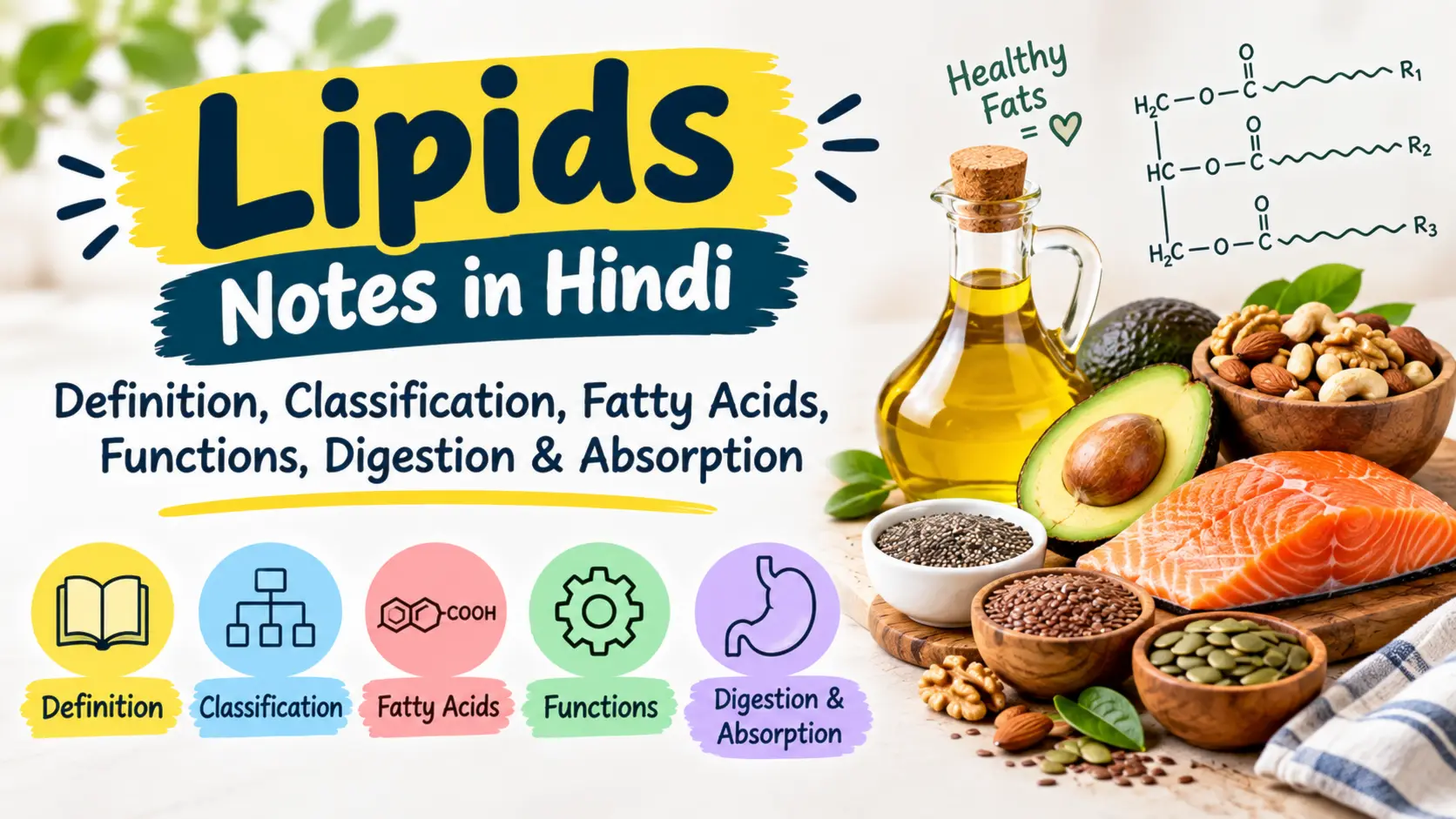
Lipids Nutrition और Food Science का एक important topic है। Lipids को आमतौर पर fats and oils के रूप में जाना जाता है, लेकिन lipids का scope केवल fats तक limited नहीं है। ये शरीर में energy storage, cell membrane formation, insulation, hormone-related functions और कई दूसरे important physiological functions में भूमिका निभाते हैं।
Lipids Notes in Hindi इस topic में हम Lipids की definition, classification, properties, fatty acids की composition और types, sources, daily requirement, functions, digestion और absorption को detail में समझेंगे। साथ ही SFA, MUFA, PUFA और Omega-3 fatty acids की nutritional significance भी देखेंगे।
Lipids Notes in Hindi
1. Lipids क्या हैं? – Definition
Lipids ऐसे organic compounds का group है जो सामान्यतः water में insoluble या poorly soluble होते हैं लेकिन organic solvents जैसे ether, chloroform और benzene में soluble होते हैं। Simple language में, lipids में fats, oils, phospholipids, sterols और कुछ related compounds शामिल होते हैं।
📢 Latest Sarkari Updates
Latest Sarkari Jobs, Results, Admit Card aur Current Affairs ki sabse tez update pane ke liye hamara WhatsApp Channel join karein.
🟢 Join WhatsApp Channel100% Free • Daily Updates
Simple Definition
“Lipids are organic substances that are insoluble in water but soluble in organic solvents.”Diet में मिलने वाले प्रमुख lipids में triglycerides, phospholipids और cholesterol शामिल हैं।
2. Lipids की Basic Composition
अधिकांश dietary fats मुख्य रूप से:
- Carbon (C)
- Hydrogen (H)
- Oxygen (O)
से बने होते हैं। कुछ complex lipids में इनके अलावा phosphorus, nitrogen या अन्य elements भी पाए जा सकते हैं।
3. Lipids का Classification
Lipids को उनकी chemical structure और composition के आधार पर अलग-अलग groups में classify किया जाता है।
Classification Flowchart
3.1 Simple Lipids
Simple lipids मुख्य रूप से fatty acids और alcohol के esters होते हैं।
Examples:
- Fats
- Oils
- Waxes
Fats
Room temperature पर generally solid form में पाए जाते हैं।
Examples: Butter, ghee, animal fats
Oils
Room temperature पर generally liquid form में पाए जाते हैं।
Examples: Mustard oil, sunflower oil, soybean oil
Waxes
Waxes fatty acids और long-chain alcohols के esters होते हैं।
Examples: Beeswax
3.2 Compound / Complex Lipids
जब lipid molecule में fatty acids और alcohol के साथ कोई additional group भी जुड़ा होता है, तो उन्हें complex या compound lipids कहा जाता है।
Important examples:
- Phospholipids
- Lipoproteins
- Glycolipids
Phospholipids
इनमें phosphate group पाया जाता है। ये cell membranes का important structural component हैं।
Lipoproteins
Lipids और proteins से बने complexes को lipoproteins कहा जाता है। इनका एक important function body में lipids का transport करना है।
3.3 Derived Lipids
Simple और complex lipids के hydrolysis से या उनसे derived compounds को derived lipids कहा जाता है।
Examples:
- Fatty acids
- Sterols
- Steroids
Cholesterol एक important sterol है।
4. Lipids की Important Properties
Lipids की कुछ important properties निम्न हैं:
1. Water में insoluble
Most lipids पानी में insoluble होते हैं।
2. Organic solvents में soluble
Lipids कई organic solvents जैसे ether और chloroform में soluble होते हैं।
3. Energy dense
Fat लगभग 9 kcal/g energy provide करता है।
इसलिए fat carbohydrate और protein की तुलना में अधिक energy-dense nutrient है।
4. Hydrophobic nature
अधिकांश lipids का water के प्रति attraction कम होता है। इसलिए उन्हें hydrophobic substances कहा जाता है।
5. Physical state
Fatty acid composition के आधार पर fats room temperature पर solid या liquid हो सकते हैं।
6. Melting point
Fatty acids की chain length और degree of saturation melting point को प्रभावित करती है।
Generally: Longer chain + more saturation → Higher melting point
5. Fatty Acids क्या हैं?
Definition
Fatty acids long hydrocarbon chains वाले organic acids होते हैं जिनके एक end पर carboxyl group (-COOH) होता है।
General structure:
CH₃ — (CH₂)n — COOHFatty acids triglycerides और कई दूसरे lipids के important components होते हैं।
6. Fatty Acid की Composition
एक typical fatty acid में तीन main parts को समझा जा सकता है:
Methyl end                         Carboxyl end
   ↓                                    ↓
CH₃ — CH₂ — CH₂ — CH₂ — ........ — COOH
      ← Hydrocarbon chain →
Main parts:
- Methyl group (CH₃)
- Hydrocarbon chain
- Carboxyl group (COOH)
Fatty acid की properties उसकी:
- Chain length
- Number of double bonds
- Position of double bonds
पर depend करती हैं।
7. Fatty Acids के Types
Fatty acids को कई आधारों पर classify किया जाता है।
Main Classification
7.1 Saturated Fatty Acids – SFA
Saturated fatty acids में carbon atoms के बीच double bond नहीं होता।
Characteristics
- No carbon-carbon double bond
- Hydrogen से relatively saturated
- कई animal fats में अधिक मात्रा में पाए जाते हैं
- कई saturated fats room temperature पर solid होते हैं
Examples
- Palmitic acid
- Stearic acid
Sources
- Butter
- Ghee
- Fatty meat
- Full-fat dairy products
- Coconut oil में भी saturated fatty acids काफी मात्रा में होते हैं
7.2 Monounsaturated Fatty Acids – MUFA
MUFA में carbon chain में एक double bond होता है।
MUFA = Monounsaturated Fatty Acids
Example
Oleic acid
Sources
- Olive oil
- Groundnut/peanut oil
- Avocado
- Nuts
7.3 Polyunsaturated Fatty Acids – PUFA
PUFA में दो या दो से अधिक double bonds होते हैं।
PUFA = Polyunsaturated Fatty Acids
Examples
- Linoleic acid
- Alpha-linolenic acid (ALA)
Sources
- Sunflower oil
- Soybean oil
- Corn oil
- Flaxseed
- Walnuts
- Fatty fish
7.4 Omega-3 Fatty Acids
Omega-3 fatty acids एक important group of polyunsaturated fatty acids हैं।
Important omega-3 fatty acids:
- ALA – Alpha-linolenic acid
- EPA – Eicosapentaenoic acid
- DHA – Docosahexaenoic acid
Sources
ALA:
- Flaxseed
- Chia seeds
- Walnuts
- Some plant oils
EPA & DHA:
- Fatty fish
- Fish oils
- Certain marine foods
8. Essential Fatty Acids
कुछ fatty acids body पर्याप्त मात्रा में synthesize नहीं कर सकती, इसलिए इन्हें diet से प्राप्त करना आवश्यक होता है।
Important essential fatty acids:
Linoleic Acid
यह Omega-6 fatty acid है।
Alpha-Linolenic Acid (ALA)
यह Omega-3 fatty acid है। इन fatty acids को diet में adequate मात्रा में लेना आवश्यक है।
9. Saturated, MUFA और PUFA में Difference
| Feature | SFA | MUFA | PUFA |
|---|---|---|---|
| Full Form | Saturated Fatty Acid | Monounsaturated Fatty Acid | Polyunsaturated Fatty Acid |
| Double Bonds | None | One | Two or more |
| Example | Palmitic acid | Oleic acid | Linoleic acid |
| Common Sources | Butter, ghee, fatty meat | Olive oil, nuts | Sunflower, soybean, flaxseed |
| Main Feature | Saturated chain | One double bond | Multiple double bonds |
10. Lipids के Dietary Sources
Lipids plant और animal दोनों sources से मिलते हैं।
Animal Sources
- Butter
- Ghee
- Milk and dairy products
- Egg yolk
- Meat
- Fish
- Fish oils
Plant Sources
- Vegetable oils
- Nuts
- Seeds
- Groundnuts
- Soybean
- Avocado
Common Vegetable Oil Sources
- Mustard oil
- Sunflower oil
- Soybean oil
- Groundnut oil
- Sesame oil
- Flaxseed oil
11. Lipids की Daily Requirement
Diet में fat की आवश्यकता व्यक्ति की:
- Age
- Sex
- Total energy requirement
- Physical activity
- Physiological condition
- Overall dietary pattern
पर depend करती है। Adults के लिए dietary fat से लगभग 20–35% total energy प्राप्त करना commonly recommended range माना जाता है।
Example
अगर किसी व्यक्ति की daily energy requirement 2000 kcal है और 30% energy fat से आती है:
2000 × 30/100 = 600 kcalFat से लगभग 600 kcal प्राप्त होंगी।
क्योंकि: 1 gram fat ≈ 9 kcal
तो: 600 ÷ 9 ≈ 67 g fat/day
यह केवल calculation का example है; actual individual requirement व्यक्ति की dietary और physiological needs पर depend करेगी।
12. Functions of Lipids
Lipids शरीर में कई important functions perform करते हैं।
12.1 Energy Source
Fat एक concentrated source of energy है।
1 g fat ≈ 9 kcal
इसलिए fat body को energy provide करने में important है।
12.2 Energy Storage
Excess energy को body adipose tissue में fat के रूप में store कर सकती है।
Excess Energy
      ↓
Fat Storage
      ↓
Adipose Tissue
12.3 Insulation
Body fat heat loss को कम करने में मदद करता है और body temperature regulation में योगदान देता है।
12.4 Protection of Organs
Adipose tissue internal organs के आसपास cushioning और protection provide करता है।
12.5 Cell Membrane Formation
Phospholipids और cholesterol cell membranes की structure में important role निभाते हैं।
12.6 Fat-Soluble Vitamins की Absorption
Dietary fat vitamins:
- Vitamin A
- Vitamin D
- Vitamin E
- Vitamin K
की absorption में मदद करता है।
12.7 Essential Fatty Acids की Supply
Dietary fats essential fatty acids provide करते हैं, जिन्हें body को diet से प्राप्त करना जरूरी होता है।
12.8 Hormone-like and Signalling Functions
कुछ fatty acids और lipid-derived compounds body में signalling और physiological processes में important भूमिका निभाते हैं।
13. Nutritional Significance of SFA
Saturated Fatty Acids (SFA) diet में energy provide करते हैं और food की texture तथा taste में भी contribution देते हैं। लेकिन dietary pattern में saturated fat की मात्रा को moderate रखना important माना जाता है। बहुत अधिक saturated fat intake को unhealthy dietary patterns में cardiovascular risk factors से जोड़ा गया है। इसलिए overall diet में saturated fat की जगह healthier unsaturated fat sources को शामिल करना useful हो सकता है।
14. Nutritional Significance of MUFA
MUFA dietary fat का एक important type है।
Main significance:
- Energy provide करते हैं
- Cell structure में contribute करते हैं
- कई plant-based foods और oils में पाए जाते हैं
- Balanced diet में unsaturated fat के useful source हो सकते हैं
Important Example
Oleic acid → Major MUFA
15. Nutritional Significance of PUFA
PUFA body के लिए important fatty acids का major group है।
Important roles:
- Cell membrane structure
- Essential fatty acid supply
- Lipid metabolism में role
- Various signalling compounds के formation में contribution
PUFA के important examples में linoleic acid और alpha-linolenic acid शामिल हैं।
16. Nutritional Significance of Omega-3 Fatty Acids
Omega-3 fatty acids विशेष nutritional importance रखते हैं।
Important Omega-3
ALA → Plant sources
EPA & DHA → Mainly marine sources
Roles
Omega-3 fatty acids:
- Cell membranes का हिस्सा होते हैं
- Brain और nervous system में important structural role रखते हैं
- Vision में DHA की important भूमिका होती है
- Normal cardiovascular function से जुड़े processes में role निभाते हैं
- Signalling molecules के formation में योगदान करते हैं
17. SFA, MUFA, PUFA और Omega-3 – Quick Comparison
| Type | Double Bonds | Example | Common Sources |
|---|---|---|---|
| SFA | 0 | Palmitic acid | Butter, ghee, fatty meat |
| MUFA | 1 | Oleic acid | Olive oil, nuts, groundnut |
| PUFA | 2 or more | Linoleic acid | Sunflower, soybean, seeds |
| Omega-3 | Multiple, depending on fatty acid | ALA, EPA, DHA | Flaxseed, walnuts, fatty fish |
18. Digestion of Lipids
Lipid digestion carbohydrates की तुलना में थोड़ा अलग होता है क्योंकि fats water में insoluble होते हैं। इसलिए digestion के दौरान fat को छोटे droplets में break करना important होता है।
Lipid Digestion Flowchart
19. Digestion of Lipids in Mouth
Mouth में lipid digestion बहुत limited होता है। Lingual lipase lipid digestion की शुरुआत में contribution कर सकता है। लेकिन adults में dietary fat digestion का major हिस्सा small intestine में होता है।
20. Lipid Digestion in Stomach
Stomach में:
- Gastric lipase
- Mechanical mixing
lipid digestion में contribute करते हैं। लेकिन dietary lipids का major digestion small intestine में होता है।
21. Lipid Digestion in Small Intestine
Small intestine lipid digestion का major site है।
यहाँ दो important processes होते हैं:
Step 1 – Emulsification
Bile salts fats को छोटे droplets में divide करने में मदद करते हैं।
Large Fat Droplet
       ↓
Bile Salts
       ↓
Small Fat Droplets
इससे fat की surface area बढ़ती है और enzymes को काम करने में आसानी होती है।
Important Point
Bile salts fat को digest नहीं करते। वे mainly emulsification में मदद करते हैं।
22. Role of Pancreatic Lipase
Pancreatic lipase small intestine में triglycerides के digestion का major enzyme है।
यह triglycerides को mainly: Monoglycerides + Free Fatty Acids में break करने में मदद करता है।
Triglyceride
     ↓
Pancreatic Lipase
     ↓
Monoglyceride + Fatty Acids
23. Micelle Formation
Fat digestion के products bile salts के साथ मिलकर micelles बना सकते हैं।
Fatty Acids + Monoglycerides
             ↓
         Bile Salts
             ↓
          Micelles
Micelles intestinal surface तक lipid digestion products को पहुंचाने में मदद करती हैं।
24. Absorption of Lipids
Small intestine lipid absorption का major site है।
Fat digestion के बाद:
- Fatty acids
- Monoglycerides
- Cholesterol
- Other lipid digestion products
intestinal cells तक पहुंचते हैं।
25. Re-esterification और Chylomicron Formation
Intestinal cells के अंदर long-chain fatty acids और monoglycerides से triglycerides फिर से बन सकते हैं। इसके बाद triglycerides, cholesterol, phospholipids और proteins मिलकर chylomicrons बनाते हैं।
26. Short-Chain and Medium-Chain Fatty Acids
Short-chain और कुछ medium-chain fatty acids का absorption long-chain fatty acids से अलग हो सकता है। इनमें से कुछ fatty acids relatively directly portal circulation की ओर जा सकते हैं और long-chain fatty acids की तरह chylomicron formation पर पूरी तरह depend नहीं करते।
27. Bile का Role in Fat Digestion
Bile liver में बनता है और gallbladder में store होता है।
Bile में bile salts होते हैं।
Bile के major roles:
- Fat emulsification
- Fat droplets की surface area बढ़ाना
- Lipid digestion और absorption को facilitate करना
- Micelle formation में सहायता करना
Important Exam Point
Bile contains digestive enzymes?
No.
Bile खुद digestive enzyme नहीं है। यह mainly emulsification और lipid absorption को facilitate करता है।
28. Lipid Digestion – Complete Flowchart
29. Important Differences
Fat vs Oil
| Feature | Fat | Oil |
|---|---|---|
| Physical State | Usually solid | Usually liquid |
| Room Temperature | Generally solid | Generally liquid |
| Common Sources | Butter, ghee | Vegetable oils |
| Fatty Acid Pattern | Often more saturated | Often more unsaturated |
SFA vs MUFA vs PUFA
| Feature | SFA | MUFA | PUFA |
|---|---|---|---|
| Double Bonds | None | One | Two or more |
| Example | Palmitic acid | Oleic acid | Linoleic acid |
| Major Sources | Animal fats, dairy | Olive/groundnut oil, nuts | Vegetable oils, seeds |
30. Important Exam Points
- Lipids are generally insoluble in water.
- Lipids are soluble in many organic solvents.
- Fat provides approximately 9 kcal/g.
- Fatty acids contain a carboxyl group (-COOH).
- SFA has no double bond.
- MUFA has one double bond.
- PUFA has two or more double bonds.
- Oleic acid → MUFA
- Linoleic acid → Omega-6 PUFA
- Alpha-linolenic acid → Omega-3 PUFA
- EPA and DHA → Important Omega-3 fatty acids
- Plant storage oil sources include seeds and nuts.
- Fat helps in absorption of Vitamins A, D, E and K.
- Small intestine is the major site of lipid digestion and absorption.
- Bile salts help in emulsification.
- Bile itself is not a digestive enzyme.
- Pancreatic lipase is a major enzyme for triglyceride digestion.
- Micelles help deliver lipid digestion products to the intestinal surface.
- Long-chain fatty acids are mainly transported after incorporation into chylomicrons.
- Chylomicrons enter the lymphatic system before reaching the bloodstream.
31. Quick Revision
Digestion Revision
FAQs – Lipids
1. Lipids क्या होते हैं?
Lipids organic compounds का एक group हैं जो generally water में insoluble और organic solvents में soluble होते हैं।
2. Lipids के main types कौन-कौन से हैं?
Lipids को broadly simple lipids, complex/compound lipids और derived lipids में classify किया जाता है।
3. Fatty acids क्या हैं?
Fatty acids long hydrocarbon chains वाले organic acids हैं जिनमें एक terminal carboxyl group (-COOH) होता है।
4. SFA क्या होता है?
Saturated Fatty Acid में carbon atoms के बीच कोई carbon-carbon double bond नहीं होता।
5. MUFA क्या होता है?
MUFA यानी Monounsaturated Fatty Acid में एक double bond होता है।
6. PUFA क्या होता है?
PUFA यानी Polyunsaturated Fatty Acid में दो या दो से अधिक double bonds होते हैं।
7. Omega-3 fatty acids के examples क्या हैं?
ALA, EPA और DHA important omega-3 fatty acids हैं।
8. Lipid digestion का major site कौन-सा है?
Small intestine lipid digestion का major site है।
9. Fat digestion में bile salts का क्या role है?
Bile salts fats को emulsify करने में मदद करते हैं, जिससे fat droplets की surface area बढ़ती है और digestive enzymes आसानी से काम कर पाते हैं।
10. Lipid digestion का major enzyme कौन-सा है?
Small intestine में pancreatic lipase triglyceride digestion का प्रमुख enzyme है।
11. Fat-soluble vitamins कौन-कौन से हैं?
Vitamin A, D, E और K fat-soluble vitamins हैं और dietary fat उनकी absorption में सहायता करता है।
12. Chylomicrons क्या हैं?
Chylomicrons lipoprotein particles हैं जो dietary lipids को intestinal cells से आगे transport करने में important role निभाते हैं।
Conclusion
Lipids केवल energy देने वाले nutrients नहीं हैं, बल्कि body में energy storage, cell membrane formation, insulation, organ protection और fat-soluble vitamins की absorption जैसे कई important functions करते हैं।
Fatty acids को समझना lipid nutrition के लिए बहुत जरूरी है। SFA, MUFA, PUFA और Omega-3 fatty acids की structure और nutritional significance में अंतर होता है। इसी तरह lipid digestion में bile salts, pancreatic lipase, micelles और chylomicrons की भूमिका exam point of view से बहुत important है।
इसलिए Lipids के topic को पढ़ते समय केवल definitions याद करने के बजाय classification + fatty acid types + functions + digestion और absorption के flow को साथ में समझना चाहिए।