
Introduction
Digestive System (पाचन तंत्र) शरीर का वह तंत्र है जो भोजन को छोटे और सरल molecules में बदलता है, ताकि शरीर उन्हें absorb करके energy, growth, repair और अन्य metabolic activities के लिए उपयोग कर सके।
हमारे भोजन में carbohydrates, proteins, fats, vitamins, minerals और water जैसे nutrients होते हैं। इनमें से carbohydrates, proteins और fats को शरीर सीधे absorb नहीं कर सकता। इन्हें digestion की प्रक्रिया द्वारा छोटे molecules में बदला जाता है।
Digestive System के मुख्य कार्य
- भोजन का ingestion यानी ग्रहण करना
- भोजन को mechanical रूप से तोड़ना
- भोजन का chemical digestion करना
- Nutrients का absorption करना
- उपयोग न होने वाले पदार्थों को शरीर से बाहर निकालना
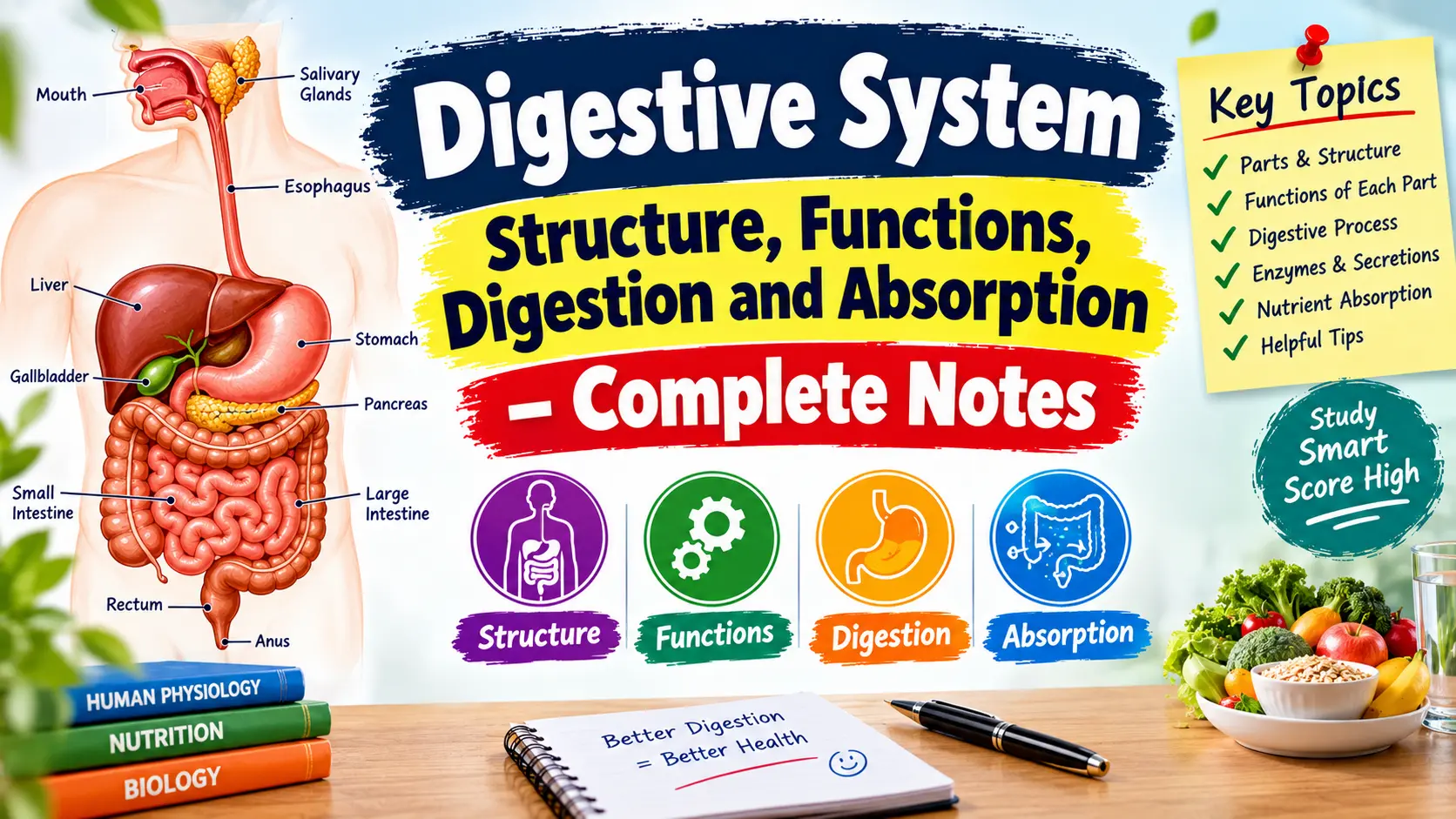
Digestive System: Structure, Functions, Digestion and Absorption
1. Structure of Gastrointestinal (G.I.) Tract
Gastrointestinal tract (G.I. tract) एक लंबी muscular tube है जो mouth से शुरू होकर anus तक जाती है। Adult में इसकी लंबाई लगभग 8–9 metres तक हो सकती है। G.I. tract के मुख्य parts हैं:
📢 Latest Sarkari Updates
Latest Sarkari Jobs, Results, Admit Card aur Current Affairs ki sabse tez update pane ke liye hamara WhatsApp Channel join karein.
🟢 Join WhatsApp Channel100% Free • Daily Updates
Mouth → Pharynx → Esophagus → Stomach → Small Intestine → Large Intestine → Rectum → Anus
इसके अलावा कुछ accessory digestive organs भी digestion में महत्वपूर्ण भूमिका निभाते हैं:
- Salivary glands
- Liver
- Gallbladder
- Pancreas
1.1 Mouth / Oral Cavity
Digestive tract की शुरुआत mouth से होती है।
Mouth में:
- Teeth
- Tongue
- Salivary glands
मुख्य structures हैं।
Functions of Mouth
- Food को ग्रहण करना
- Teeth द्वारा food को काटना और चबाना
- Tongue द्वारा food को mix करना
- Food को saliva के साथ मिलाना
- Carbohydrate digestion की शुरुआत करना
- Food को swallowing के लिए तैयार करना
Saliva
Saliva मुख्य रूप से salivary glands द्वारा secret होता है। Saliva में salivary amylase (ptyalin) enzyme होता है, जो starch के digestion की शुरुआत करता है।
1.2 Pharynx
Pharynx mouth और esophagus के बीच स्थित muscular passage है। इसका मुख्य कार्य swallowed food को esophagus की ओर भेजना है। Swallowing के दौरान epiglottis respiratory tract में food जाने से रोकने में मदद करता है।
1.3 Esophagus
Esophagus एक muscular tube है जो pharynx को stomach से जोड़ती है। इसकी लंबाई लगभग 25 cm होती है। Esophagus में food को stomach की ओर ले जाने का काम peristalsis द्वारा होता है।
Peristalsis
Peristalsis smooth muscles की rhythmic, wave-like contractions हैं, जो food को digestive tract में आगे बढ़ाती हैं।
1.4 Stomach
Stomach एक muscular, J-shaped organ है जो esophagus और small intestine के बीच स्थित होता है।
Stomach के मुख्य regions:
- Cardia
- Fundus
- Body
- Pyloric region
Stomach के अंतिम भाग पर pyloric sphincter होता है, जो partially digested food को small intestine में जाने को नियंत्रित करता है।
Functions of Stomach
- Food को temporarily store करना
- Food को muscular contractions द्वारा mix करना
- Gastric juice का secretion
- Protein digestion की शुरुआत
- कुछ पदार्थों का limited absorption
- Acidic environment बनाना
- Food को semi-liquid chyme में बदलना
1.5 Small Intestine
Small intestine digestion और absorption का सबसे महत्वपूर्ण भाग है। इसकी लंबाई लगभग 6 metres होती है।
इसके तीन मुख्य parts हैं:
- Duodenum
- Jejunum
- Ileum
Duodenum
यह small intestine का पहला भाग है। यहाँ stomach से आने वाला chyme pancreatic juice और bile के संपर्क में आता है। Duodenum में digestion की बहुत महत्वपूर्ण chemical reactions होती हैं।
Jejunum
Jejunum में digestion आगे जारी रहता है और nutrients का absorption काफी मात्रा में होता है।
Ileum
Ileum small intestine का अंतिम भाग है और यह large intestine से ileocecal valve के माध्यम से जुड़ता है। यहाँ भी nutrients का absorption होता है।
1.6 Large Intestine
Large intestine small intestine के बाद स्थित होता है।
इसके मुख्य parts हैं:
- Cecum
- Colon
- Rectum
Colon के मुख्य parts:
- Ascending colon
- Transverse colon
- Descending colon
- Sigmoid colon
Functions of Large Intestine
- Water का absorption
- Electrolytes का absorption
- Faeces का formation
- Faeces का temporary storage
- Intestinal bacteria द्वारा कुछ vitamins का synthesis
1.7 Rectum
Rectum large intestine का अंतिम भाग है। यह faeces को temporarily store करता है।
1.8 Anus
Anus digestive tract का अंतिम opening है। इसके द्वारा defecation की प्रक्रिया में faeces शरीर से बाहर निकलता है।
2. Layers of G.I. Tract
G.I. tract की wall मुख्य रूप से चार layers से बनी होती है।
1. Mucosa
यह सबसे अंदर की layer है।
इसके functions:
- Secretion
- Absorption
- Protection
2. Submucosa
इस layer में blood vessels, lymphatic vessels और nerves पाए जाते हैं।
3. Muscularis
इसमें smooth muscle layers होती हैं।
इनका मुख्य कार्य:
- Peristalsis
- Mixing movements
4. Serosa
यह G.I. tract की बाहरी protective covering है।
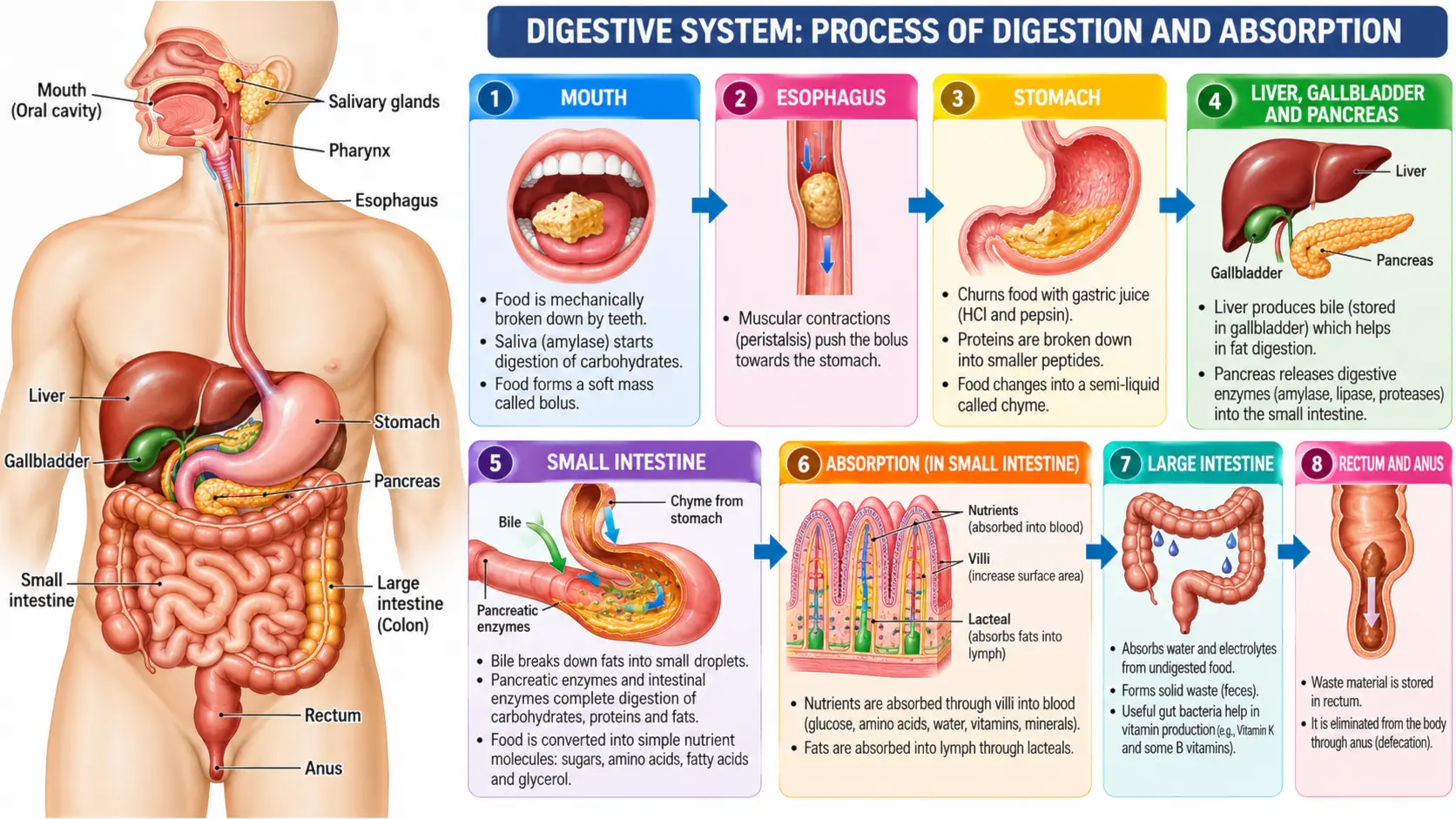
3. Process of Digestion
Digestion वह प्रक्रिया है जिसमें complex food substances को छोटे और simpler molecules में बदला जाता है ताकि उन्हें शरीर द्वारा absorb किया जा सके। Digestion दो प्रकार का होता है:
Mechanical Digestion
इसमें food को physical रूप से छोटे pieces में तोड़ा जाता है।
उदाहरण:
- Chewing
- Stomach churning
- Intestinal mixing
Chemical Digestion
इसमें digestive enzymes की सहायता से complex nutrients को simpler molecules में बदला जाता है।
4. Digestion of Carbohydrates
Carbohydrates का digestion मुख्य रूप से mouth और small intestine में होता है।
Mouth में
Salivary glands से निकलने वाला salivary amylase starch पर कार्य करता है।
Starch → Smaller carbohydrates
Stomach में acidic environment के कारण salivary amylase की activity बहुत कम हो जाती है।
Small Intestine में
Pancreatic amylase carbohydrates के digestion को आगे बढ़ाता है। इसके बाद intestinal enzymes disaccharides को monosaccharides में बदलते हैं।
Final Products
Carbohydrate digestion के मुख्य final products हैं:
- Glucose
- Fructose
- Galactose
इनका absorption मुख्य रूप से small intestine में होता है।
5. Digestion of Proteins
Protein digestion stomach से शुरू होता है।
Stomach में
Stomach में Hydrochloric Acid (HCl) acidic environment बनाता है।
HCl:
- Protein को denature करने में मदद करता है
- Pepsinogen को active enzyme pepsin में बदलने में सहायता करता है
Pepsin proteins को smaller peptides में तोड़ता है।
Small Intestine में
Pancreas से आने वाले proteolytic enzymes proteins और peptides के digestion को आगे बढ़ाते हैं। Intestinal enzymes peptides को छोटे peptides और amino acids में बदलने में मदद करते हैं।
Final Product
Proteins → Amino acids
Amino acids small intestine से absorb होते हैं।
6. Digestion of Fats
Fat digestion comparatively complex process है। Small intestine में bile salts fats को छोटे droplets में तोड़ने में सहायता करते हैं। इस process को emulsification कहते हैं।
Emulsification
Large fat globules को छोटे droplets में तोड़ना emulsification कहलाता है। इससे lipase के लिए fat पर कार्य करना आसान हो जाता है। Pancreatic lipase triglycerides पर कार्य करता है।
Final Products
Fats के digestion से मुख्य रूप से:
- Fatty acids
- Monoglycerides
जैसे products बनते हैं। ये आगे absorption की प्रक्रिया में शामिल होते हैं।
7. Digestion of Vitamins and Minerals
Vitamins और minerals सामान्यतः carbohydrates, proteins और fats की तरह digestive enzymes द्वारा break down नहीं होते। इनका मुख्य कार्य digestive tract से appropriate forms में absorption होना है।
- Water-soluble vitamins – मुख्यतः small intestine में absorb होते हैं।
- Fat-soluble vitamins – fats के absorption के साथ closely associated होते हैं।
Fat-soluble vitamins हैं:
A, D, E और K
8. Absorption of Food
Absorption वह प्रक्रिया है जिसमें digested nutrients digestive tract से blood या lymph में प्रवेश करते हैं। Absorption का सबसे महत्वपूर्ण स्थान small intestine है।
Villi and Microvilli
Small intestine की inner lining पर finger-like projections होती हैं जिन्हें villi कहते हैं। Villi की surface पर microscopic projections microvilli होती हैं। Villi और microvilli intestinal surface area को बहुत बढ़ाते हैं और nutrients के absorption को efficient बनाते हैं।
Villi में
- Blood capillaries
- Lacteals
पाए जाते हैं।
9. Absorption of Carbohydrates
Carbohydrates digestion के बाद मुख्य रूप से monosaccharides के रूप में absorb होते हैं।
मुख्य monosaccharides:
- Glucose
- Fructose
- Galactose
ये intestinal cells से होकर blood में जाते हैं और portal circulation के माध्यम से liver तक पहुँचते हैं।
10. Absorption of Proteins
Proteins digestion के बाद मुख्य रूप से amino acids के रूप में absorb होते हैं। Amino acids intestinal wall से blood capillaries में जाते हैं। इसके बाद वे hepatic portal circulation द्वारा liver तक पहुँचते हैं।
11. Absorption of Fats
Fat digestion के products intestinal cells में absorb होते हैं। Long-chain fatty acids और monoglycerides intestinal cells में दोबारा triglycerides में परिवर्तित होकर chylomicrons के रूप में package होते हैं। Chylomicrons lymphatic system में enter करते हैं और बाद में blood circulation में पहुँचते हैं।
Important Exam Point
Carbohydrates और amino acids → मुख्यतः blood capillaries
Long-chain dietary fats → lymphatic system के माध्यम से
12. Absorption of Water
Water का absorption मुख्य रूप से small intestine में होता है, जबकि large intestine भी remaining water के absorption में महत्वपूर्ण भूमिका निभाता है। Water absorption शरीर के fluid balance को maintain करने में मदद करता है।
13. Liver
Liver शरीर का सबसे बड़ा internal gland और एक प्रमुख metabolic organ है। यह abdomen के upper right side में, diaphragm के नीचे स्थित होता है। Liver का वजन adult में लगभग 1.5 kg होता है, हालांकि actual weight व्यक्ति के अनुसार अलग हो सकता है।
Structure of Liver
Liver मुख्य रूप से दो बड़े lobes में divided होता है:
- Right lobe
- Left lobe
Microscopic structural और functional unit को hepatic lobule कहा जाता है। Hepatic lobules में hepatocytes प्रमुख cells होते हैं।
14. Functions of Liver
Liver शरीर में अनेक महत्वपूर्ण functions करता है।
1. Bile Production
Liver bile बनाता है। Bile fat digestion और absorption में सहायता करती है।
2. Carbohydrate Metabolism
Liver glucose को glycogen के रूप में store कर सकता है। यह blood glucose regulation में महत्वपूर्ण भूमिका निभाता है।
3. Protein Metabolism
Liver amino acids के metabolism में महत्वपूर्ण भूमिका निभाता है। यह plasma proteins के synthesis में भी योगदान देता है।
4. Fat Metabolism
Liver fatty acids और lipids के metabolism में महत्वपूर्ण भूमिका निभाता है।
5. Detoxification
Liver कई drugs और potentially harmful substances के metabolism और detoxification में महत्वपूर्ण भूमिका निभाता है।
6. Storage
Liver विभिन्न substances को store करता है, जैसे:
- Glycogen
- Iron
- कुछ vitamins
7. Plasma Protein Synthesis
Liver albumin और कई अन्य plasma proteins के synthesis में महत्वपूर्ण भूमिका निभाता है।
8. Urea Formation
Protein metabolism से बनने वाले ammonia को liver urea में convert करने में महत्वपूर्ण भूमिका निभाता है।
15. Gallbladder
Gallbladder एक छोटा, pear-shaped sac है जो liver के नीचे स्थित होता है। इसका मुख्य काम bile को store और concentrate करना है।
Important Point
Gallbladder bile बनाता नहीं है। Bile liver बनाता है और gallbladder उसे store करता है।
Functions of Gallbladder
- Bile को store करना
- Bile को concentrate करना
- जरूरत पड़ने पर bile को duodenum में release करना
- Fat digestion और absorption में सहायता करना
जब fatty food small intestine में पहुँचता है, तो bile release होने में मदद मिलती है।
16. Pancreas
Pancreas एक mixed gland है जो digestive और endocrine दोनों functions करता है। यह stomach के पीछे, upper abdomen में स्थित होता है।
Pancreas के मुख्य parts हैं:
- Head
- Neck
- Body
- Tail
17. Exocrine Functions of Pancreas
Pancreas digestive enzymes वाला pancreatic juice बनाता है। Pancreatic juice duodenum में पहुँचता है। इसके प्रमुख enzymes हैं:
Pancreatic Amylase
Carbohydrates के digestion में सहायता करता है।
Pancreatic Lipase
Fats के digestion में महत्वपूर्ण enzyme है।
Proteolytic Enzymes
जैसे:
- Trypsin
- Chymotrypsin
- Carboxypeptidase
ये proteins और peptides के digestion में सहायता करते हैं। Pancreatic juice में bicarbonate भी होता है, जो stomach से आने वाले acidic chyme को neutralize करने में सहायता करता है।
18. Endocrine Functions of Pancreas
Pancreas में Islets of Langerhans नामक endocrine cell groups होते हैं। ये hormones बनाते हैं।
Insulin
Blood glucose level को कम करने में मदद करता है।
Glucagon
Blood glucose level को बढ़ाने में मदद करता है। इस प्रकार pancreas blood glucose regulation में महत्वपूर्ण भूमिका निभाता है।
19. Digestive Juices and Their Functions
| Digestive Juice | Main Source | Important Components | Main Function |
|---|---|---|---|
| Saliva | Salivary glands | Salivary amylase | Carbohydrate digestion की शुरुआत |
| Gastric Juice | Stomach | HCl, Pepsin | Protein digestion |
| Bile | Liver | Bile salts | Fat emulsification |
| Pancreatic Juice | Pancreas | Amylase, Lipase, Proteases, Bicarbonate | Carbohydrate, fat और protein digestion |
| Intestinal Juice | Small intestine | Various enzymes | Digestion को complete करने में सहायता |
20. Digestion and Absorption – Flow Chart
21. Digestion of Major Nutrients – Quick Revision Table
| Nutrient | Major Site of Digestion | Important Enzymes/Substances | Final Products |
|---|---|---|---|
| Carbohydrates | Mouth + Small Intestine | Amylase, intestinal enzymes | Monosaccharides |
| Proteins | Stomach + Small Intestine | Pepsin, pancreatic proteases | Amino acids |
| Fats | Mainly Small Intestine | Bile + Pancreatic lipase | Fatty acids + Monoglycerides |
22. Important Differences
Liver vs Gallbladder
| Liver | Gallbladder |
|---|---|
| Large gland | Small sac |
| Bile बनाता है | Bile store करता है |
| Metabolism में major role | Bile concentration और release |
| Detoxification करता है | Detoxification नहीं करता |
Liver vs Pancreas
| Liver | Pancreas |
|---|---|
| Bile बनाता है | Pancreatic juice बनाता है |
| सबसे बड़ा internal gland | Mixed gland |
| Metabolism में major role | Digestion + endocrine functions |
| Hepatocytes मुख्य cells | Acinar cells और Islets of Langerhans |
23. Important Terms
Ingestion
Food को शरीर में लेने की प्रक्रिया।
Mastication
Food को teeth द्वारा chew करने की प्रक्रिया।
Deglutition
Swallowing की प्रक्रिया।
Peristalsis
G.I. tract में food को आगे बढ़ाने वाली rhythmic muscular movement।
Digestion
Complex food substances को simpler molecules में बदलने की प्रक्रिया।
Absorption
Digested nutrients का digestive tract से blood या lymph में जाना।
Assimilation
Absorbed nutrients का body cells द्वारा उपयोग किया जाना।
Defecation
Faeces को शरीर से बाहर निकालने की प्रक्रिया।
Chyme
Stomach में partially digested food से बनने वाला semi-fluid mass।
Emulsification
Large fat globules को छोटे droplets में तोड़ना।
24. Exam Points
- G.I. tract mouth से शुरू होकर anus पर समाप्त होता है।
- Esophagus में food movement peristalsis द्वारा होता है।
- Protein digestion की शुरुआत stomach में होती है।
- Carbohydrate digestion की शुरुआत mouth में होती है।
- Fat digestion और absorption में bile महत्वपूर्ण है।
- Bile का production liver करता है।
- Bile का storage gallbladder करता है।
- Pancreas pancreatic digestive enzymes release करता है।
- Small intestine digestion और absorption का प्रमुख स्थान है।
- Small intestine की inner surface पर villi और microvilli होते हैं।
- Villi में blood capillaries और lacteals पाए जाते हैं।
- Long-chain dietary fats lymphatic system के माध्यम से transport होते हैं।
- Large intestine water और electrolytes के absorption में महत्वपूर्ण है।
- Liver glycogen store करने में मदद करता है।
- Pancreas insulin और glucagon hormones भी बनाता है।
- Insulin blood glucose को कम करने में मदद करता है।
- Glucagon blood glucose को बढ़ाने में मदद करता है।
Conclusion
Digestive System भोजन को ग्रहण करने से लेकर digestion, absorption और waste elimination तक कई महत्वपूर्ण कार्य करता है। G.I. tract food को आगे बढ़ाता है और विभिन्न digestive organs तथा glands enzymes और digestive secretions प्रदान करते हैं।
Small intestine digestion और nutrient absorption का मुख्य स्थान है, जबकि liver, gallbladder और pancreas digestion तथा metabolism में महत्वपूर्ण भूमिका निभाते हैं। इसलिए Digestive System को समझने के लिए इन तीनों accessory organs के functions को विशेष रूप से याद रखना चाहिए।
Related Post
- 2 September 2026 Current Affairs in Hindi: आज के महत्वपूर्ण Current Affairs, Exam Points & Important
- Blood: Composition, Formed Elements, Functions & Blood Groups – Complete Notes
- 1 September 2026 Current Affairs in Hindi: आज के महत्वपूर्ण Current Affairs, Exam Points & Important Facts
- DSSSB Court Attendant Result 2026 Out, Download Result PDF
- 31 August 2026 Current Affairs in Hindi: आज के महत्वपूर्ण Current Affairs, Exam Points & Important Facts
- Protein Notes in Hindi: Definition, Classification, Structure, Functions, Sources & Digestion