
1. Protein – Definition
Protein एक complex organic compound है जो मुख्य रूप से Carbon (C), Hydrogen (H), Oxygen (O) और Nitrogen (N) से बना होता है। कुछ proteins में Sulphur (S) और अन्य elements भी पाए जाते हैं। Protein की basic structural units Amino Acids हैं। कई amino acids आपस में Peptide Bonds द्वारा जुड़कर peptides और proteins बनाते हैं।
Important Points
- Protein शब्द Greek word “Proteios” से लिया गया है, जिसका अर्थ primary/first importance है।
- Protein शरीर के growth, repair और maintenance के लिए essential है।
- Protein शरीर के enzymes, hormones, antibodies और कई structural tissues का important component है।
- 1 gram protein लगभग 4 kcal energy देता है।
2. Amino Acids
Definition
Amino acids वे organic compounds हैं जो proteins की basic building blocks हैं।
एक सामान्य amino acid में निम्न groups पाए जाते हैं:
📢 Latest Sarkari Updates
Latest Sarkari Jobs, Results, Admit Card aur Current Affairs ki sabse tez update pane ke liye hamara WhatsApp Channel join karein.
🟢 Join WhatsApp Channel100% Free • Daily Updates
- Amino group – NH₂
- Carboxyl group – COOH
- Hydrogen – H
- Variable side chain – R group
General Structure
NH₂ – CH(R) – COOH
R group अलग-अलग amino acids को एक-दूसरे से अलग करता है।
3. Classification of Amino Acids
Amino acids को मुख्य रूप से nutritional requirement के आधार पर classify किया जाता है।
A. Essential Amino Acids (EAA)
वे amino acids जिन्हें शरीर पर्याप्त मात्रा में स्वयं नहीं बना सकता और इसलिए diet से प्राप्त करना आवश्यक होता है।
Important Essential Amino Acids
| Essential Amino Acid |
|---|
| Histidine |
| Isoleucine |
| Leucine |
| Lysine |
| Methionine |
| Phenylalanine |
| Threonine |
| Tryptophan |
| Valine |
Easy Mnemonic
“PVT TIM HLL”
- P – Phenylalanine
- V – Valine
- T – Threonine
- T – Tryptophan
- I – Isoleucine
- M – Methionine
- H – Histidine
- L – Leucine
- L – Lysine
B. Non-Essential Amino Acids
वे amino acids जिन्हें शरीर metabolic processes के द्वारा पर्याप्त मात्रा में बना सकता है।
Examples:
- Alanine
- Asparagine
- Aspartic acid
- Glutamic acid
- Serine
C. Conditionally Essential Amino Acids
कुछ परिस्थितियों में शरीर की requirement बढ़ जाती है और endogenous synthesis पर्याप्त नहीं हो पाती। ऐसी स्थिति में कुछ amino acids diet से लेना आवश्यक हो सकता है।
Examples:
- Arginine
- Cysteine
- Glutamine
- Glycine
- Proline
- Tyrosine
ऐसी conditions
- Infancy
- Rapid growth
- Severe illness
- Trauma
- Burns
- Certain metabolic disorders
4. Functions of Amino Acids
Amino acids के important functions:
- Protein synthesis
- Growth और tissue development
- Tissue repair
- Enzymes और hormones के synthesis में भूमिका
- Neurotransmitters के formation में योगदान
- Antibodies के formation में भूमिका
- Energy production में उपयोग
- Nitrogen-containing compounds के synthesis में योगदान
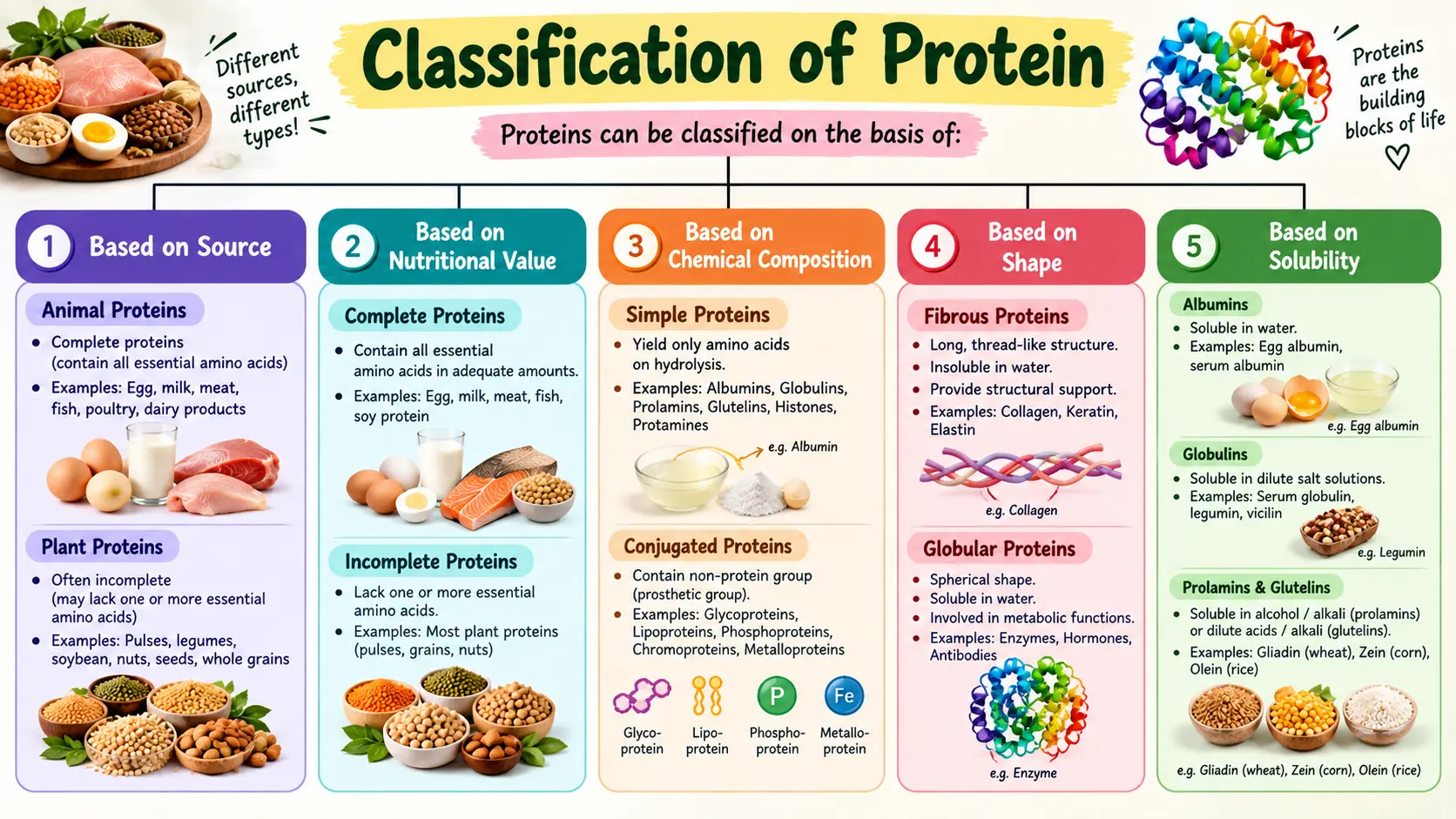
5. Protein Classification
Proteins को अलग-अलग आधार पर classify किया जा सकता है।
A. Classification According to Chemical Composition
1. Simple Proteins
Hydrolysis पर केवल amino acids देते हैं।
Examples:
- Albumin
- Globulin
- Glutelin
- Prolamin
- Scleroproteins
2. Conjugated Proteins
Protein के साथ एक non-protein component भी जुड़ा होता है।
| Conjugated Protein | Non-Protein Component |
|---|---|
| Glycoprotein | Carbohydrate |
| Lipoprotein | Lipid |
| Phosphoprotein | Phosphate |
| Hemoprotein | Heme |
| Nucleoprotein | Nucleic acid |
Example: Hemoglobin एक hemoprotein है।
3. Derived Proteins
Native proteins के physical या chemical changes से derived proteins बनते हैं।
Examples:
- Proteoses
- Peptones
- Peptides
6. Classification According to Shape
A. Fibrous Proteins
इनकी structure long, thread-like होती है।
Characteristics:
- Generally strong
- Water में कम soluble
- Mainly structural functions
Examples:
- Collagen
- Keratin
- Elastin
Functions
- Skin
- Hair
- Nails
- Tendons
- Connective tissues
B. Globular Proteins
इनकी structure compact और spherical होती है।
Characteristics:
- Generally more soluble
- Metabolic functions में important
Examples:
- Albumin
- Globulin
- Hemoglobin
- Many enzymes
7. Protein Structure
Protein structure को चार levels में समझा जाता है।
1. Primary Structure
Protein chain में amino acids का specific sequence primary structure कहलाता है।
Example: Amino acid 1 → Amino acid 2 → Amino acid 3 → Amino acid 4
Primary structure को mainly peptide bonds maintain करते हैं।
2. Secondary Structure
Polypeptide chain का local folding secondary structure कहलाता है।
Main forms:
- α-helix
- β-pleated sheet
इस structure को mainly hydrogen bonds stabilize करते हैं।
3. Tertiary Structure
एक single polypeptide chain की complete three-dimensional folding को tertiary structure कहते हैं।
इसमें विभिन्न interactions शामिल होते हैं:
- Hydrogen bonds
- Ionic bonds
- Hydrophobic interactions
- Disulphide bonds
4. Quaternary Structure
जब दो या दो से अधिक polypeptide chains मिलकर functional protein बनाती हैं, तो इसे quaternary structure कहते हैं।
Example: Hemoglobin
8. Peptide Bond
दो amino acids के बीच बनने वाला bond Peptide Bond कहलाता है।
इस reaction में:
Amino group (NH₂) + Carboxyl group (COOH) → Peptide bond + H₂O
इस process को condensation reaction कहा जाता है।
Important
- 2 amino acids → Dipeptide
- 3 amino acids → Tripeptide
- Few amino acids → Oligopeptide
- Large chain → Polypeptide
9. Properties of Proteins
Important properties:
1. Solubility
Different proteins की water solubility अलग-अलग होती है।
2. Denaturation
Heat, acids, alkalis, alcohol आदि के कारण protein की natural structure में बदलाव को denaturation कहते हैं।
Example:
Cooking of egg
Egg white का albumin heat से denature होकर coagulate हो जाता है।
3. Coagulation
Denatured protein के aggregation से relatively insoluble mass बनने को coagulation कहते हैं।
4. Amphoteric Nature
Proteins acidic और basic दोनों प्रकार का behaviour दिखा सकते हैं।
5. Buffering Action
Proteins शरीर के acid-base balance को maintain करने में सहायता करते हैं।
10. Functions of Proteins
Protein के major functions:
1. Growth and Development
Children, adolescents और pregnancy में tissue growth के लिए protein आवश्यक है।
2. Tissue Repair
Damaged tissues की repair और replacement में protein important है।
3. Structural Function
Protein शरीर के कई tissues का structural component है।
Examples:
- Collagen
- Keratin
- Elastin
4. Enzyme Formation
लगभग सभी enzymes proteins या protein-containing molecules होते हैं।
5. Hormone Formation
कुछ hormones protein या peptide nature के होते हैं।
Examples:
- Insulin
- Growth hormone
6. Antibody Formation
Immune system में antibodies protein nature की होती हैं।
7. Transport Function
कुछ proteins substances को blood में transport करते हैं।
Examples:
- Hemoglobin – oxygen transport
- Albumin – कई substances का transport
8. Fluid Balance
Plasma proteins, especially albumin, blood में osmotic pressure maintain करने में मदद करते हैं।
9. Acid-Base Balance
Proteins hydrogen ions को bind/release करके buffering में मदद करते हैं।
10. Energy
जब carbohydrate और fat पर्याप्त नहीं होते, protein energy source के रूप में इस्तेमाल हो सकता है।
1 g protein = लगभग 4 kcal
11. Genetic and Cellular Functions
Proteins cellular processes, receptors और gene-related functions में भी महत्वपूर्ण भूमिका निभाते हैं।
11. Sources of Protein
Protein sources को दो major groups में बाँटा जा सकता है।
A. Animal Sources
- Milk
- Curd
- Paneer
- Cheese
- Egg
- Fish
- Chicken
- Meat
Animal proteins में generally essential amino acids अच्छी मात्रा में होते हैं।
B. Plant Sources
- Pulses
- Legumes
- Soybean
- Peanuts
- Nuts
- Seeds
- Cereals
- Millets
Important Plant Protein Sources
- Soybean
- Lentils
- Chickpea
- Kidney beans
- Peas
- Groundnut
12. Complete and Incomplete Protein
Complete Protein
ऐसा protein जिसमें सभी essential amino acids पर्याप्त मात्रा में उपलब्ध हों।
Examples:
- Egg
- Milk
- Meat
- Fish
Incomplete Protein
जिस protein में एक या अधिक essential amino acids limiting amount में हों। कई plant proteins traditionally इस category में रखे जाते हैं, हालांकि कुछ plant foods high-quality protein प्रदान करते हैं।
13. Complementary Proteins
दो या अधिक plant protein sources को combine करने पर एक source की limiting amino acid दूसरे source द्वारा improve हो सकती है।
Examples:
Cereal + Pulse
Rice + Dal
Cereal + Legume
Wheat + Pulses
Important Concept
Cereals में अक्सर lysine limiting हो सकता है, जबकि pulses में methionine relatively limiting हो सकता है। इसलिए cereal + pulse combination protein quality improve कर सकता है।
14. Daily Protein Requirement
Healthy adults के लिए protein requirement सामान्यतः लगभग:
0.8 g protein/kg body weight/day
के आसपास मानी जाती है।
लेकिन requirement व्यक्ति की condition के अनुसार बदल सकती है।
Requirement बढ़ सकती है:
- Infancy
- Childhood
- Adolescence
- Pregnancy
- Lactation
- Recovery from illness
- Burns
- Trauma
- Certain clinical conditions
Protein Requirement Formula
Daily Protein Requirement = Body Weight (kg) × Protein Requirement (g/kg/day)
Example
यदि व्यक्ति का body weight = 60 kg
और requirement = 0.8 g/kg/day
तो:
60 × 0.8 = 48 g/day
इसलिए approximately 48 g protein/day की आवश्यकता होगी। Actual requirement age, physiological condition, health status और dietary guidelines के अनुसार बदल सकती है।
15. Protein Deficiency
Diet में पर्याप्त protein न मिलने से शरीर में कई problems हो सकती हैं।
Effects
- Growth retardation
- Muscle wasting
- Weakness
- Poor wound healing
- Reduced immunity
- Edema
- Loss of body weight
- Hair changes
- Skin changes
Severe protein-energy malnutrition में Kwashiorkor और Marasmus जैसी conditions देखी जा सकती हैं।
16. Effects of Too Low Protein Intake
बहुत कम protein intake के कारण:
- Muscle mass कम हो सकता है।
- Growth और development प्रभावित हो सकते हैं।
- Immunity कम हो सकती है।
- Wound healing slow हो सकती है।
- Albumin level कम होने पर edema हो सकता है।
- कमजोरी और fatigue हो सकती है।
- Children में growth failure हो सकता है।
- Severe deficiency में protein-energy malnutrition हो सकता है।
17. Effects of Excessive Protein Intake
बहुत अधिक protein intake, खासकर लंबे समय तक और जरूरत से काफी अधिक होने पर, कुछ लोगों में problems से जुड़ा हो सकता है।
Possible effects:
- Total calorie intake बढ़ना
- Dehydration की tendency
- Gastrointestinal discomfort
- यदि high-protein diet में saturated fat अधिक हो तो cardiovascular risk factors पर प्रभाव पड़ सकता है
- Kidney disease वाले व्यक्तियों में protein intake को medical advice के अनुसार manage करना आवश्यक हो सकता है
Important
Healthy व्यक्ति में normal dietary protein intake और extremely high protein intake को एक जैसा नहीं समझना चाहिए।
18. Protein Digestion
Protein digestion mouth में significant chemical digestion के रूप में शुरू नहीं होता।
Step 1 – Mouth
- Food chewing से छोटे pieces में टूटता है।
- Saliva में protein-digesting enzyme नहीं होता।
- इसलिए protein का major enzymatic digestion mouth में नहीं होता।
Step 2 – Stomach
Stomach में:
HCl
Hydrochloric acid:
- Protein को denature करता है।
- Pepsinogen को active Pepsin में convert करने में मदद करता है।
Pepsin
Pepsin protein को smaller peptides में break करता है।
Protein → Peptides
19. Digestion in Small Intestine
Protein digestion का major part small intestine में होता है।
Pancreas से enzymes release होते हैं:
- Trypsin
- Chymotrypsin
- Elastase
- Carboxypeptidase
Enteropeptidase
Small intestinal mucosa से enteropeptidase trypsinogen को trypsin में activate करता है।
Trypsinogen → Trypsin
Trypsin फिर दूसरे pancreatic zymogens को activate करने में मदद करता है।
20. Brush Border Digestion
Small intestine की brush border और intestinal cells में peptidases peptides को छोटे peptides और amino acids में break करते हैं।
Final products
- Amino acids
- Dipeptides
- Tripeptides
इनका absorption intestinal cells द्वारा होता है।
21. Protein Absorption
Protein digestion के बाद मुख्य रूप से: Amino acids + Dipeptides + Tripeptides absorb होते हैं। Intestinal cells में dipeptides और tripeptides आगे amino acids में break हो सकते हैं। Amino acids फिर blood में जाते हैं और portal circulation → liver तक पहुँचते हैं।
22. Flow Chart of Protein Digestion
23. Protein Quality
Protein quality का अर्थ है कि dietary protein शरीर की growth, maintenance और tissue repair के लिए कितनी effectively उपयोग हो सकता है।
Protein quality assess करने के लिए कई methods हैं:
- Biological Value (BV)
- Protein Efficiency Ratio (PER)
- Net Protein Utilization (NPU)
- Digestibility
- DIAAS आदि
इस topic में BV, PER और NPU विशेष रूप से important हैं।
24. Biological Value – BV
Definition
Biological Value बताता है कि absorbed nitrogen में से कितना nitrogen body द्वारा retained किया गया।
Formula
BV = (Nitrogen Retained ÷ Nitrogen Absorbed) × 100
या:
BV = [(N Intake − N Fecal − N Urinary) ÷ (N Intake − N Fecal)] × 100
Important
- BV absorption के बाद nitrogen utilization को reflect करता है।
- Higher BV generally indicates better utilization of absorbed protein nitrogen.
Example
अगर:
- Nitrogen absorbed = 80 g
- Nitrogen retained = 64 g
तो:
BV = (64 ÷ 80) × 100
BV = 80
25. Protein Efficiency Ratio – PER
Definition
PER बताता है कि consumed protein की प्रति gram मात्रा से कितना body weight gain हुआ।
Formula
PER = Weight Gain (g) ÷ Protein Intake (g)
Example
यदि:
- Weight gain = 30 g
- Protein intake = 10 g
तो:
PER = 30 ÷ 10
PER = 3
Important
PER traditionally animal growth studies में protein quality assess करने के लिए use किया गया है।
26. Net Protein Utilization – NPU
Definition
NPU बताता है कि dietary protein से प्राप्त nitrogen का कितना हिस्सा शरीर में retain हुआ।
Formula
NPU = (Nitrogen Retained ÷ Nitrogen Intake) × 100
या:
NPU = [(N Intake − N Excretion) ÷ N Intake] × 100
जहाँ excretion में मुख्यतः fecal और urinary nitrogen शामिल किया जाता है।
Example
यदि:
- Nitrogen intake = 100 g
- Nitrogen retained = 60 g
तो:
NPU = (60 ÷ 100) × 100
NPU = 60%
27. BV, PER और NPU – Difference
| Method | Main Measurement | Formula |
|---|---|---|
| BV | Absorbed nitrogen में से retained nitrogen | N retained ÷ N absorbed × 100 |
| PER | Body weight gain per gram protein | Weight gain ÷ Protein intake |
| NPU | Intake nitrogen में से retained nitrogen | N retained ÷ N intake × 100 |
याद रखने का आसान तरीका
BV → Absorbed में से कितना Retained?
NPU → Intake में से कितना Retained?
PER → Protein खाने से कितना Weight Gain?
28. Relationship Between BV and NPU
Conceptually:
NPU ≈ Digestibility × BV
यदि digestibility और BV को percentage form में लिया जाए, तो:
NPU (%) ≈ [Digestibility (%) × BV (%)] ÷ 100
Example
Digestibility = 80%
BV = 75%
तो:
NPU = (80 × 75) ÷ 100
NPU = 60%
यह relationship conceptual calculation के लिए useful है; actual assessment method के details के अनुसार values अलग हो सकती हैं।
29. Nitrogen Balance
Protein metabolism को समझने के लिए nitrogen balance important है।
Nitrogen Balance
Nitrogen Balance = Nitrogen Intake − Nitrogen Loss
A. Positive Nitrogen Balance
जब:
Nitrogen Intake > Nitrogen Loss
तो positive nitrogen balance होता है।
देखा जा सकता है:
- Growing children
- Pregnancy
- Recovery from illness
- Tissue building
B. Negative Nitrogen Balance
जब: Nitrogen Intake < Nitrogen Loss तो negative nitrogen balance होता है।
देखा जा सकता है:
- Protein deficiency
- Starvation
- Severe illness
- Trauma
- Burns
- Muscle wasting
C. Zero Nitrogen Balance
जब: Nitrogen Intake = Nitrogen Loss तो nitrogen balance approximately zero होता है। यह healthy adults में normal maintenance state से associated है।
30. Factors Affecting Protein Bioavailability
Protein bioavailability का अर्थ है कि protein/amino acids digestion और absorption के बाद शरीर के लिए कितने effectively available होते हैं।
Important factors:
1. Protein Source
Animal और plant proteins की amino acid composition अलग होती है।
2. Amino Acid Composition
यदि किसी essential amino acid की मात्रा कम है तो protein utilization कम हो सकता है। ऐसे amino acid को Limiting Amino Acid कहा जाता है।
3. Digestibility
Protein जितना आसानी से digest होगा, amino acids की availability उतनी बेहतर हो सकती है।
4. Food Processing
Cooking, soaking, fermentation और processing protein digestibility को affect कर सकते हैं। कुछ processing methods anti-nutritional factors कम करके protein utilization improve कर सकते हैं।
5. Heat
Moderate cooking:
- Protein को denature कर सकता है।
- Digestibility improve कर सकता है।
लेकिन excessive heating:
- कुछ amino acids की availability कम कर सकता है।
- विशेष रूप से Lysine की nutritional availability Maillard reaction के कारण प्रभावित हो सकती है।
31. Anti-Nutritional Factors
कुछ naturally occurring food compounds nutrients के digestion, absorption या utilization को interfere कर सकते हैं। इन्हें Anti-Nutritional Factors (ANFs) कहा जाता है।
Important examples:
1. Trypsin Inhibitors
Mainly कुछ raw legumes/soybeans में पाए जा सकते हैं।
Effect:
- Trypsin activity को inhibit करते हैं।
- Protein digestion को reduce कर सकते हैं।
Control
Proper cooking/heat treatment
2. Phytates / Phytic Acid
Mainly:
- Whole grains
- Legumes
- Seeds
- Nuts
में पाए जाते हैं।
Effect:
- Minerals के absorption को प्रभावित कर सकते हैं।
- Protein digestion और mineral availability पर भी प्रभाव पड़ सकता है।
Reduction Methods
- Soaking
- Germination
- Fermentation
- Proper cooking
3. Tannins
कुछ cereals, legumes, tea आदि में पाए जाते हैं।
Effect:
- Proteins और digestive enzymes के साथ interaction कर सकते हैं।
- Protein digestibility को कम कर सकते हैं।
4. Lectins
कुछ legumes, विशेषकर raw/undercooked beans, में पाए जा सकते हैं।
Effect:
- Intestinal cells के साथ interaction कर सकते हैं।
- GI problems और nutrient utilization पर प्रभाव डाल सकते हैं।
Control
Proper cooking
32. Factors Improving Protein Bioavailability
Protein utilization improve करने के लिए:
1. Proper Cooking
Cooking कई anti-nutritional factors को reduce कर सकती है।
2. Soaking
Soaking कुछ water-soluble anti-nutritional compounds को reduce करने में मदद कर सकता है।
3. Germination
Sprouting के दौरान enzymes activate होते हैं और कुछ anti-nutritional factors कम हो सकते हैं।
4. Fermentation
Fermentation:
- Digestibility improve कर सकता है।
- कुछ anti-nutritional factors कम कर सकता है।
5. Complementary Protein Combination
Different plant proteins combine करने से amino acid profile improve किया जा सकता है।
Example:
Cereal + Pulse
Rice + Dal
Wheat + Dal
33. Limiting Amino Acid
किसी protein में वह essential amino acid जो requirement की तुलना में सबसे कम मात्रा में उपलब्ध होता है और protein utilization को limit करता है, Limiting Amino Acid कहलाता है।
Examples
Cereals → Lysine अक्सर limiting
Many pulses → Methionine relatively limiting
इसलिए:
Cereal + Pulse = Complementary Protein
34. Protein Sparing Action
जब diet में पर्याप्त carbohydrate और fat उपलब्ध होते हैं, तो body उन्हें energy के लिए use कर सकती है और protein को mainly:
- Growth
- Repair
- Maintenance
- Functional roles
के लिए बचाया जा सकता है। इसे Protein Sparing Action कहा जाता है।
35. Important Protein Formulas – Quick Revision
1. Protein Energy
1 g Protein = 4 kcal
2. Daily Protein Requirement
Protein Requirement = Body Weight (kg) × Requirement (g/kg/day)
3. Biological Value
BV = N Retained ÷ N Absorbed × 100
4. PER
PER = Weight Gain (g) ÷ Protein Intake (g)
5. NPU
NPU = N Retained ÷ N Intake × 100
6. Nitrogen Balance
N Balance = N Intake − N Loss
7. NPU and Digestibility
NPU ≈ Digestibility × BV ÷ 100
36. Exam-Oriented One-Liners
- Protein की basic units amino acids हैं।
- Amino acids protein में peptide bonds से जुड़े होते हैं।
- Protein digestion का major site small intestine है।
- Stomach में protein digestion के लिए मुख्य enzyme pepsin है।
- Pepsinogen को pepsin में activate करने में HCl मदद करता है।
- Pancreatic protein-digesting enzymes में trypsin, chymotrypsin और carboxypeptidase शामिल हैं।
- Enteropeptidase trypsinogen को trypsin में activate करता है।
- BV absorbed nitrogen के utilization को बताता है।
- PER weight gain per gram protein intake को बताता है।
- NPU dietary nitrogen में से retained nitrogen को बताता है।
- Albumin fluid balance में important है।
- Hemoglobin oxygen transport करता है।
- Collagen major structural protein है।
- Keratin hair और nails में पाया जाता है।
- Cereals में lysine अक्सर limiting amino acid होता है।
- Pulses में methionine relatively limiting हो सकता है।
- Cereal + pulse combination को complementary protein का example माना जाता है।
- Proper cooking कई anti-nutritional factors को कम कर सकती है।
- Trypsin inhibitors protein digestion को interfere कर सकते हैं।
- Phytate mineral availability को affect कर सकता है।
- Tannins protein digestibility को affect कर सकते हैं।
- Lectins विशेषकर raw/undercooked legumes में concern हो सकते हैं।
- Positive nitrogen balance growth और tissue building में देखा जाता है।
- Negative nitrogen balance protein deficiency, starvation और tissue breakdown में हो सकता है।
37. Very Short Revision Chart
Primary → Secondary → Tertiary → Quaternary
Growth + Repair + Enzymes + Hormones + Immunity + Transport + Fluid Balance + Energy
Small Intestine → Trypsin + Chymotrypsin + Peptidases
Amino Acids → Intestinal Cells → Portal Blood → Liver
BV + PER + NPU
Digestibility + Amino Acid Profile + Processing + Cooking + Anti-Nutritional Factors
Trypsin Inhibitors + Phytates + Tannins + Lectins
Conclusion
Protein शरीर के लिए एक essential nutrient है जो growth, tissue repair, muscle maintenance, enzymes, hormones, immunity और fluid balance में important role निभाता है। Protein की quality केवल उसकी quantity पर नहीं, बल्कि amino acid composition, digestibility और bioavailability पर भी depend करती है। BV, PER और NPU protein quality को assess करने के important methods हैं। Balanced diet में adequate protein लेना और proper food preparation करना protein के बेहतर utilization के लिए जरूरी है।
Frequently Asked Questions (FAQs)
1. Protein की basic unit क्या है?
Amino acids protein की basic units हैं।
2. Amino acids किस bond से जुड़े होते हैं?
Amino acids peptide bonds से जुड़े होते हैं।
3. Protein digestion कहाँ शुरू होता है?
Protein का enzymatic digestion stomach में pepsin की action से शुरू होता है।
4. Protein digestion का major site कौन सा है?
Protein digestion का major part small intestine में होता है।
5. 1 gram protein कितनी energy देता है?
1 gram protein लगभग 4 kcal energy देता है।
- Carbohydrates Notes: Definition, Classification, Structure, Functions, Digestion & Absorption
- Carbohydrates Quiz: Definition, Classification, Functions & Digestion
- 25 August 2026 Current Affairs in Hindi
- Basic Food Science Quiz: Food, Nutrition and Nutrients
- Basic Food Science Notes: Food, Nutrition and Nutrients
- UPESSC PRT Assistant Teacher Recruitment 2026