
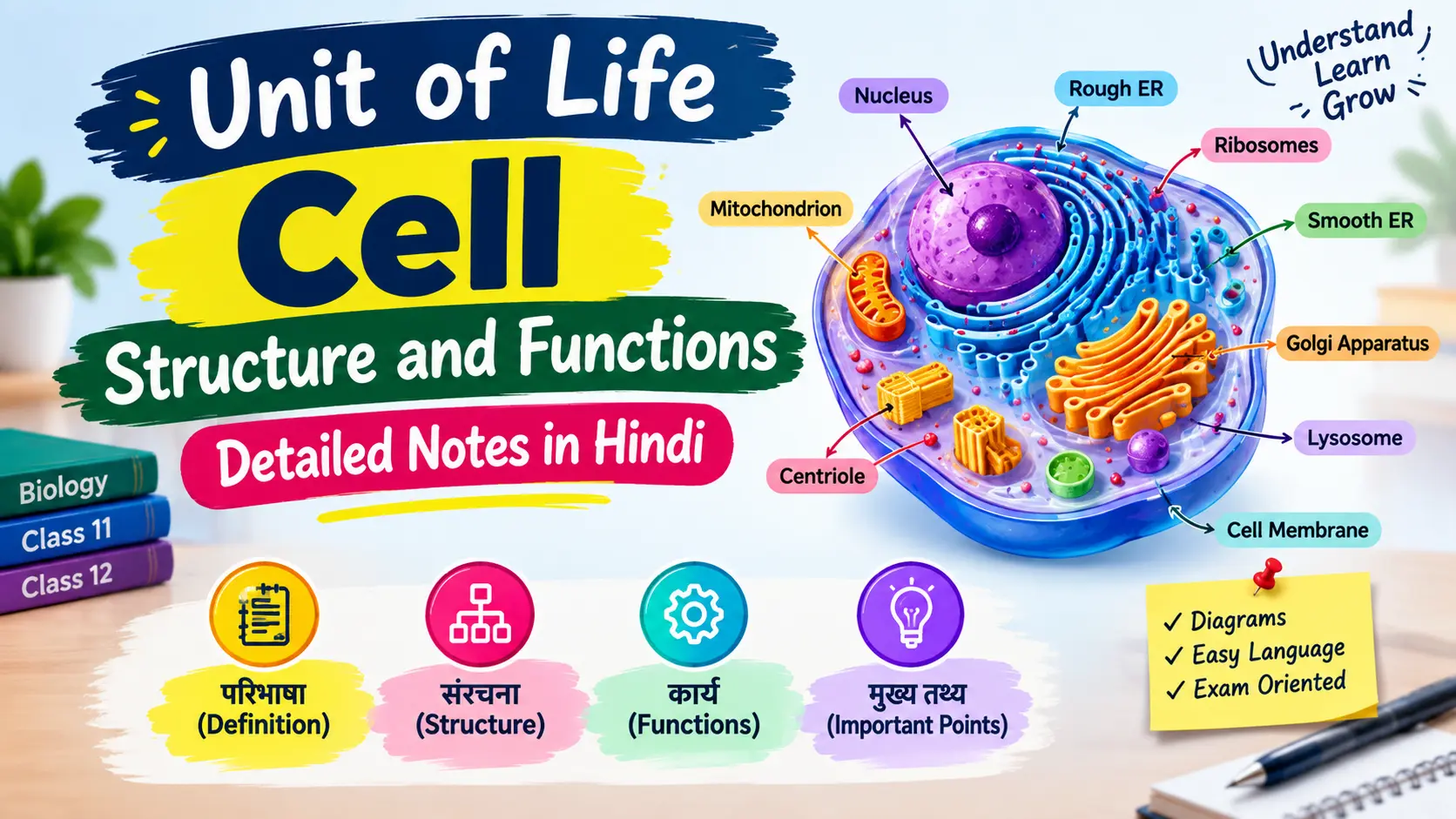
Unit of Life: Cell Structure and Functions Unit of Life Biology का एक important topic है। सभी living organisms की basic structural और functional unit Cell (कोशिका) होती है। शरीर की growth, metabolism, reproduction, repair और विभिन्न physiological activities cells के द्वारा ही होती हैं।
इस chapter में हम Cell Structure and Functions, Plasma Membrane, Fluid Mosaic Model, Mitochondria, Ribosome, Endoplasmic Reticulum, Nucleus, Nucleotide और Homeostasis को detail में समझेंगे।
Unit of Life: Cell Structure and Functions
1. Cell क्या है? – कोशिका की परिभाषा
Definition
Cell is the basic structural and functional unit of life.
📢 Latest Sarkari Updates
Latest Sarkari Jobs, Results, Admit Card aur Current Affairs ki sabse tez update pane ke liye hamara WhatsApp Channel join karein.
🟢 Join WhatsApp Channel100% Free • Daily Updates
अर्थात् कोशिका (Cell) जीवों की basic structural और functional unit है।
Simple words में, किसी भी living organism का शरीर cells से बना होता है और शरीर की अधिकांश life activities cells के अंदर या cells द्वारा होती हैं।
Cell की मुख्य विशेषताएँ
- Cell living organisms की basic unit है।
- यह शरीर की structure बनाने में मदद करती है।
- इसमें विभिन्न cell organelles पाए जाते हैं।
- Cell में metabolism की विभिन्न reactions होती हैं।
- Cell nutrients को use करके energy प्राप्त करती है।
- Cells growth और repair में important हैं।
- कुछ cells independently reproduce कर सकती हैं।
Cell का Basic Organization
Cell → Cell Organelles → Tissues → Organs → Organ Systems → Organism
2. Cell के मुख्य भाग
एक typical cell को broadly तीन major parts में समझा जा सकता है:
| Part | Meaning / Function |
|---|---|
| Plasma Membrane | Cell को बाहरी environment से अलग करती है |
| Cytoplasm | Organelles और cellular reactions का मुख्य स्थान |
| Nucleus | Genetic material और cell activities का control centre |
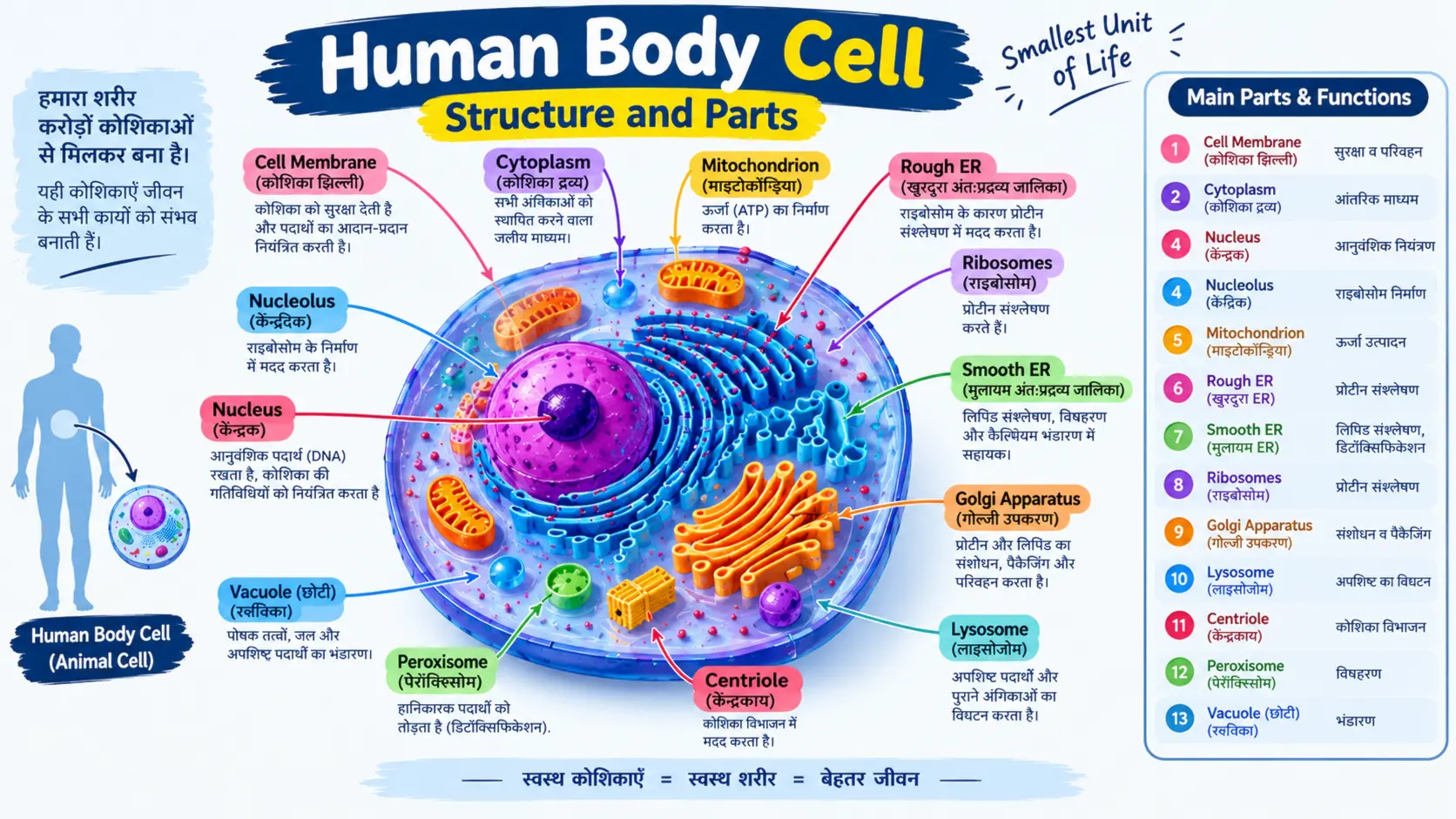
Basic Cell Flow Chart
Cell को surround करती है
Cell organelles मौजूद रहते हैं
Genetic information को contain करता है
3. Plasma Membrane
Definition
Plasma membrane is a thin, living, selectively permeable membrane that surrounds the cell. हिंदी में, Plasma membrane एक पतली, जीवित और selectively permeable membrane है जो cell को चारों ओर से घेरती है। इसे Cell Membrane भी कहा जाता है।
Plasma Membrane की मुख्य विशेषताएँ
- यह बहुत thin होती है।
- यह living membrane है।
- यह selectively permeable होती है।
- यह cell के अंदर और बाहर substances के movement को control करती है।
- यह cell को protection और shape प्रदान करने में मदद करती है।
- यह cell को external environment से अलग रखती है।
4. Plasma Membrane की Composition
Plasma membrane मुख्य रूप से निम्न components से बनी होती है:
- Lipids
- Proteins
- Carbohydrates
Main Components
| Component | Main Role |
|---|---|
| Phospholipids | Membrane की basic structure बनाते हैं |
| Proteins | Transport, receptors और enzymes के रूप में काम करते हैं |
| Carbohydrates | Cell recognition और communication में मदद करते हैं |
| Cholesterol | Membrane की stability और fluidity को regulate करता है |
5. Phospholipid Bilayer
Plasma membrane में phospholipids की double layer होती है जिसे phospholipid bilayer कहते हैं। एक phospholipid में दो important parts होते हैं:
1. Hydrophilic Head
- Water-loving part
- पानी की ओर आकर्षित होता है।
2. Hydrophobic Tail
- Water-fearing part
- पानी से दूर रहने की tendency रखता है।
Simple Diagram Concept
इस arrangement के कारण plasma membrane एक effective barrier की तरह काम करती है।
6. Fluid Mosaic Model
Plasma membrane की structure को explain करने के लिए Fluid Mosaic Model दिया गया था। इस model के अनुसार plasma membrane एक fluid phospholipid bilayer है जिसमें proteins अलग-अलग positions पर embedded होते हैं।
Fluid का Meaning
Fluid का अर्थ है कि membrane के components, विशेषकर lipids और कुछ proteins, membrane के अंदर lateral movement कर सकते हैं।
Mosaic का Meaning
Mosaic का अर्थ है कि membrane में अलग-अलग प्रकार के proteins, lipids और carbohydrates एक mosaic pattern में arranged होते हैं।
Fluid Mosaic Model – Simple Flow
Fluid Mosaic Model के Important Points
Plasma membrane dynamic होती है।
Phospholipid bilayer basic framework बनाता है।
Proteins membrane में embedded होते हैं।
कुछ proteins membrane के across होते हैं।
कुछ proteins surface पर पाए जाते हैं।
Carbohydrates cell recognition में important हैं।
Cholesterol membrane stability और fluidity को regulate करता है।
Exam Point : Fluid Mosaic Model = Fluid phospholipid bilayer + embedded proteins + carbohydrates + cholesterol
7. Plasma Membrane के Functions
1. Protection
Cell के internal components को protect करती है।
2. Selective Transport
यह decide करती है कि कौन-सा substance cell में enter या बाहर जा सकता है।
3. Cell Communication
Membrane proteins receptors की तरह काम करके signals receive करते हैं।
4. Cell Recognition
Membrane carbohydrates और proteins cell recognition में important होते हैं।
5. Maintaining Internal Environment
Cell के internal environment को maintain करने में मदद करती है।
6. Transport of Materials
Membrane के through substances का movement हो सकता है:
Diffusion → Osmosis → Facilitated Diffusion → Active Transport
8. Mitochondria
Definition
Mitochondria are double-membrane-bound organelles that are mainly responsible for ATP production through cellular respiration.
हिंदी में, Mitochondria double membrane वाले cell organelles हैं जो cellular respiration के द्वारा ATP के रूप में energy production में major role निभाते हैं। इन्हें commonly Powerhouse of the Cell कहा जाता है।
Mitochondria की Structure
Mitochondria की मुख्य structures:
- Outer membrane
- Intermembrane space
- Inner membrane
- Cristae
- Matrix
Structure Flow
Cristae क्या हैं?
Inner mitochondrial membrane की folds को Cristae कहते हैं। Cristae surface area को बढ़ाती हैं, जिससे energy-producing reactions के लिए अधिक membrane area उपलब्ध होता है।
Matrix क्या है?
Inner membrane के अंदर का fluid-filled region Mitochondrial Matrix कहलाता है। Matrix में कई enzymes, mitochondrial DNA और ribosomes पाए जाते हैं।
Mitochondria के Functions
- Cellular respiration में important role।
- ATP production।
- कई metabolic reactions में participation।
- Fatty acid oxidation में role।
- कुछ cellular processes में calcium regulation से संबंध।
- Mitochondria के पास अपना DNA होता है।
Exam Point
Mitochondria = Powerhouse of Cell
ATP = Major energy currency of the cell
9. Ribosome
Definition
Ribosomes are non-membranous cell structures responsible for protein synthesis. हिंदी में, Ribosome एक non-membranous structure है जो protein synthesis का मुख्य स्थान है।
इसे cell की protein factory भी कहा जाता है।
Ribosome के Components
Ribosome मुख्य रूप से:
- rRNA
- Proteins
से बना होता है। इसमें दो subunits होती हैं:
Large Subunit + Small Subunit
Ribosome के Types
Free Ribosomes
Cytoplasm में freely पाए जाते हैं।
Bound Ribosomes
Endoplasmic Reticulum की surface से attached होते हैं।
Ribosome का Main Function
mRNA → Ribosome → Protein
Ribosome mRNA की information को पढ़कर amino acids को उचित sequence में जोड़ने में मदद करता है।
Exam Point
Ribosome = Site of Protein Synthesis
10. Endoplasmic Reticulum – ER
Definition
Endoplasmic Reticulum is a network of membrane-bound tubules and sacs present in the cytoplasm. हिंदी में, Endoplasmic Reticulum cytoplasm में पाया जाने वाला membrane-bound tubules और sacs का network है।
ER मुख्यतः दो प्रकार का होता है:
- Rough Endoplasmic Reticulum – RER
- Smooth Endoplasmic Reticulum – SER
11. Rough Endoplasmic Reticulum – RER
RER की surface पर ribosomes attached होते हैं। इसी कारण इसे Rough ER कहा जाता है।
Functions
- Protein synthesis में important role।
- Newly synthesized proteins की processing में सहायता।
- Proteins को आगे transport करने में मदद।
- Secretory proteins के production में important।
याद रखें
RER = Ribosome Present = Protein-related Function
12. Smooth Endoplasmic Reticulum – SER
SER की surface पर ribosomes नहीं होते। इसलिए इसे Smooth ER कहा जाता है।
Functions
- Lipid synthesis
- Steroid synthesis में role
- Detoxification
- Calcium storage में role
- कुछ carbohydrate metabolism reactions में participation
याद रखें
SER = No Ribosome = Lipid-related Functions
RER vs SER
| Feature | RER (Rough ER) | SER (Smooth ER) |
|---|---|---|
| Ribosome | Present | Absent |
| Appearance | Rough | Smooth |
| Major Function | Protein synthesis | Lipid synthesis |
| Detoxification | Less prominent | Important |
| Steroid synthesis | Not major | Important |
13. Nucleus – केंद्रक
Definition
Nucleus is a membrane-bound organelle that contains the genetic material and regulates many activities of the cell. हिंदी में, Nucleus एक membrane-bound organelle है जिसमें genetic material मौजूद होता है और जो cell की अनेक activities को regulate करता है।
इसे cell का control centre कहा जाता है।
Nucleus के Main Components
- Nuclear membrane / Nuclear envelope
- Nuclear pores
- Nucleoplasm
- Nuclear chromatin
- Nucleolus
14. Nuclear Membrane / Nuclear Envelope
Nucleus को surround करने वाली membrane को Nuclear Envelope कहते हैं। यह generally double membrane होती है।
Functions
- Genetic material को protect करती है।
- Nucleus और cytoplasm के बीच separation बनाए रखती है।
- Nuclear pores के माध्यम से substances के exchange में सहायता करती है।
15. Nuclear Pores
Nuclear envelope में छोटे openings को Nuclear Pores कहते हैं। इनके माध्यम से nucleus और cytoplasm के बीच selected molecules का transport होता है।
Simple Flow
Cytoplasm ⇄ Nuclear Pores ⇄ Nucleus
Nucleus के अंदर DNA और associated proteins से बना material Chromatin कहलाता है।
Chromatin का Importance
- Genetic information को contain करता है।
- DNA को organize करने में मदद करता है।
- Cell division के समय chromosomes बनाने में important role।
Chromatin → Chromosome
Cell division के समय chromatin अधिक condensed होकर chromosomes का रूप ले सकता है।
Simple Flow
17. Nucleolus
Nucleus के अंदर पाया जाने वाला dense, non-membranous region Nucleolus कहलाता है।
Main Function
Nucleolus का प्रमुख कार्य ribosomal RNA (rRNA) synthesis और ribosome subunits के assembly से संबंधित है।
Exam Point
Nucleolus → rRNA + Ribosome Assembly
18. Nucleus के Functions
- Genetic material को store करना।
- Gene expression को regulate करना।
- Cell activities के regulation में role।
- DNA replication में important।
- RNA synthesis में role।
- Cell division को control करने में सहायता।
19. Nucleotide
Definition
Nucleotide is the basic structural unit of nucleic acids such as DNA and RNA. हिंदी में, Nucleotide DNA और RNA जैसे nucleic acids की basic structural unit है। एक nucleotide में तीन major components होते हैं:
Nucleotide = Nitrogenous Base + Pentose Sugar + Phosphate Group
Nucleotide के Components
| Component | Meaning |
|---|---|
| Nitrogenous Base | Nitrogen-containing organic compound |
| Pentose Sugar | Five-carbon sugar |
| Phosphate Group | Phosphorus-containing group |
Nitrogenous Bases
DNA में
- Adenine – A
- Guanine – G
- Cytosine – C
- Thymine – T
RNA में
- Adenine – A
- Guanine – G
- Cytosine – C
- Uracil – U
Important Difference
DNA → Thymine
RNA → Uracil
20. Nucleoside और Nucleotide में Difference
यह exam में frequently पूछा जा सकता है।
| Nucleoside | Nucleotide |
|---|---|
| Nitrogenous Base + Sugar | Nitrogenous Base + Sugar + Phosphate |
| Phosphate नहीं होता | Phosphate present होता है |
| Example: Adenosine | Example: AMP |
Easy Trick
Nucleoside = Base + Sugar
Nucleotide = Base + Sugar + Phosphate
21. Nucleotide के Functions
- DNA और RNA की structure बनाने में।
- Genetic information storage में indirect/structural role।
- ATP जैसे molecules में energy transfer से संबंधित role।
- Cell signalling में कुछ nucleotides/nucleotide derivatives important होते हैं।
- Nucleic acid synthesis में basic building blocks के रूप में काम करते हैं।
22. Homeostasis
Definition
Homeostasis is the ability of an organism or cell to maintain a relatively stable internal environment despite changes in the external environment.
हिंदी में, Homeostasis वह ability है जिसके द्वारा body अपने internal environment को relatively stable बनाए रखती है, भले ही external environment में changes होते रहें।
Simple Meaning
Homeo = Same/Similar
Stasis = Standing/Stable condition
अर्थात् शरीर के internal conditions को relatively stable रखना।
23. Homeostasis क्यों जरूरी है?
हमारे body cells को properly function करने के लिए internal environment की कुछ conditions को suitable range में रखना जरूरी है।
उदाहरण:
- Body temperature
- Blood glucose
- Blood pressure
- Water balance
- Electrolyte balance
- pH
- Calcium level
इन conditions में बहुत ज्यादा बदलाव cellular functions को प्रभावित कर सकते हैं।
24. Homeostasis का Basic Mechanism
Homeostasis में generally तीन major components होते हैं:
1. Receptor / Sensor
Change को detect करता है।
2. Control Centre
Information को receive करके response decide करता है।
3. Effector
Required response produce करता है।
Flow Chart
25. Negative Feedback
Definition
Negative feedback is a regulatory mechanism in which the response opposes or reduces the original change. हिंदी में, Negative feedback में body का response original change को कम या oppose करता है। यह homeostasis को maintain करने का बहुत common mechanism है।
Example: Body Temperature
अगर body temperature बढ़ता है:
इस प्रकार original increase को response reduce करता है।
Negative Feedback Flow Chart
26. Positive Feedback
Definition
Positive feedback is a regulatory mechanism in which the response amplifies or increases the original change. हिंदी में, Positive feedback में response original change को और बढ़ाता है। इसका उद्देश्य सामान्यतः change को जल्दी complete करना होता है।
Example: Childbirth
Childbirth के दौरान:
27. Negative Feedback vs Positive Feedback
| Feature | Negative Feedback | Positive Feedback |
|---|---|---|
| Response | Original change को oppose करता है | Original change को amplify करता है |
| Main Role | Stability/Homeostasis | Process को तेजी से complete करना |
| Effect | Change कम होता है | Change बढ़ता है |
| Common Example | Body temperature regulation | Childbirth |
| Homeostasis | बहुत common mechanism | comparatively less common |
28. Homeostasis में Negative Feedback का Importance
Negative feedback body को stable condition में रखने में important है।
| Condition | Negative Feedback Example |
|---|---|
| Body Temperature | Sweating / Shivering |
| Blood Glucose | Insulin / Glucagon regulation |
| Blood Pressure | Pressure regulation mechanisms |
| Calcium Level | Hormonal regulation |
29. Cell Organelles – Quick Revision Table
| Cell Structure | Main Function |
|---|---|
| Plasma Membrane | Selective barrier and transport |
| Mitochondria | ATP production / cellular respiration |
| Ribosome | Protein synthesis |
| RER | Protein synthesis and processing |
| SER | Lipid synthesis and detoxification |
| Nucleus | Genetic control centre |
| Nuclear Envelope | Nucleus को surround करता है |
| Nuclear Pores | Nucleus-cytoplasm transport |
| Chromatin | Genetic material organization |
| Nucleolus | rRNA synthesis and ribosome assembly |
30. Important Definitions – Quick Revision
Cell
Living organisms की basic structural and functional unit.
Plasma Membrane
Cell को surround करने वाली selectively permeable living membrane.
Fluid Mosaic Model
Plasma membrane की dynamic structure जिसमें phospholipid bilayer और embedded proteins होते हैं।
Mitochondria
Double-membrane organelles जो cellular respiration और ATP production में important हैं।
Ribosome
Protein synthesis का मुख्य cellular structure.
Endoplasmic Reticulum
Cytoplasm में पाया जाने वाला membrane-bound network of tubules and sacs.
Nucleus
Genetic material-containing membrane-bound organelle और cell regulation का major centre.
Chromatin
DNA और associated proteins से बना nuclear material.
Nucleolus
Nucleus का region जहाँ rRNA synthesis और ribosome assembly से संबंधित activities होती हैं।
Nucleotide
Nucleic acids की basic structural unit consisting of base, sugar and phosphate.
Homeostasis
Internal environment को relatively stable बनाए रखने की ability.
Negative Feedback
ऐसा mechanism जिसमें response original change को कम करता है।
Positive Feedback
ऐसा mechanism जिसमें response original change को और बढ़ाता है।
31. Exam में याद रखने वाले Important Points
- Cell = Basic structural and functional unit of life
- Plasma membrane = Selectively permeable
- Fluid Mosaic Model = Singer and Nicolson
- Phospholipid = Hydrophilic head + Hydrophobic tails
- Mitochondria = Powerhouse of cell
- Cristae = Inner mitochondrial membrane की folds
- Ribosome = Site of protein synthesis
- RER = Ribosomes present
- SER = Ribosomes absent
- Nucleus = Genetic material-containing control centre
- Nuclear envelope = Double membrane
- Nucleolus = rRNA synthesis and ribosome assembly
- Chromatin = DNA + associated proteins
- Nucleotide = Base + Sugar + Phosphate
- Nucleoside = Base + Sugar
- DNA contains Thymine
- RNA contains Uracil
- Homeostasis = Stable internal environment
- Negative feedback = Opposes original change
- Positive feedback = Amplifies original change
32. One-Page Quick Revision Flow Chart
→ Selective barrier
→ Fluid Mosaic Model
→ Phospholipid + Protein + Carbohydrate + Cholesterol
→ ATP
→ Cellular Respiration
→ Cristae + Matrix
→ Protein Synthesis
→ RER → Protein-related functions
→ SER → Lipid synthesis + Detoxification
→ Nuclear Pores
→ Chromatin
→ Nucleolus
→ Change को reduce करता है
→ Change को amplify करता है
Conclusion
Unit of Life को समझने के लिए cell की structure और उसके organelles के functions को समझना बहुत important है। Plasma membrane cell के internal environment को regulate करती है, mitochondria energy production में, ribosomes protein synthesis में, ER protein और lipid-related functions में तथा nucleus genetic information और cellular regulation में important role निभाता है।
इसी प्रकार nucleotide DNA और RNA की basic unit है, जबकि homeostasis body के internal environment को relatively stable रखने में मदद करता है। Homeostasis में negative feedback stability maintain करने और positive feedback किसी particular process को amplify करने में important role निभाता है।
ये topics B.Sc. Nutrition/Dietetics, Biology, Human Physiology और अन्य competitive/academic examinations के लिए important हैं।
FAQ – Unit of Life
Q1. Cell क्या है?
Cell जीवों की basic structural और functional unit है।
Q2. Plasma membrane क्या है?
Plasma membrane एक thin, living और selectively permeable membrane है जो cell को surround करती है।
Q3. Fluid Mosaic Model क्या बताता है?
Fluid Mosaic Model plasma membrane की dynamic structure को explain करता है, जिसमें phospholipid bilayer में proteins embedded रहते हैं।
Q4. Mitochondria को powerhouse of the cell क्यों कहा जाता है?
क्योंकि mitochondria cellular respiration के दौरान ATP के रूप में energy production में important role निभाता है।
Q5. Ribosome का मुख्य कार्य क्या है?
Ribosome का मुख्य कार्य protein synthesis है।
Q6. RER और SER में क्या अंतर है?
RER की surface पर ribosomes होते हैं और यह protein-related functions में important है, जबकि SER पर ribosomes नहीं होते और यह lipid synthesis तथा detoxification में important है।
Q7. Nucleus क्या है?
Nucleus एक membrane-bound organelle है जिसमें genetic material पाया जाता है और यह cell की कई activities को regulate करता है।
Q8. Nucleolus का मुख्य कार्य क्या है?
Nucleolus rRNA synthesis और ribosome subunits की assembly से संबंधित है।
Q9. Nucleotide किससे बना होता है?
Nucleotide में Nitrogenous Base + Pentose Sugar + Phosphate Group होते हैं।
Q10. Homeostasis क्या है?
Homeostasis body के internal environment को relatively stable बनाए रखने की ability है।