
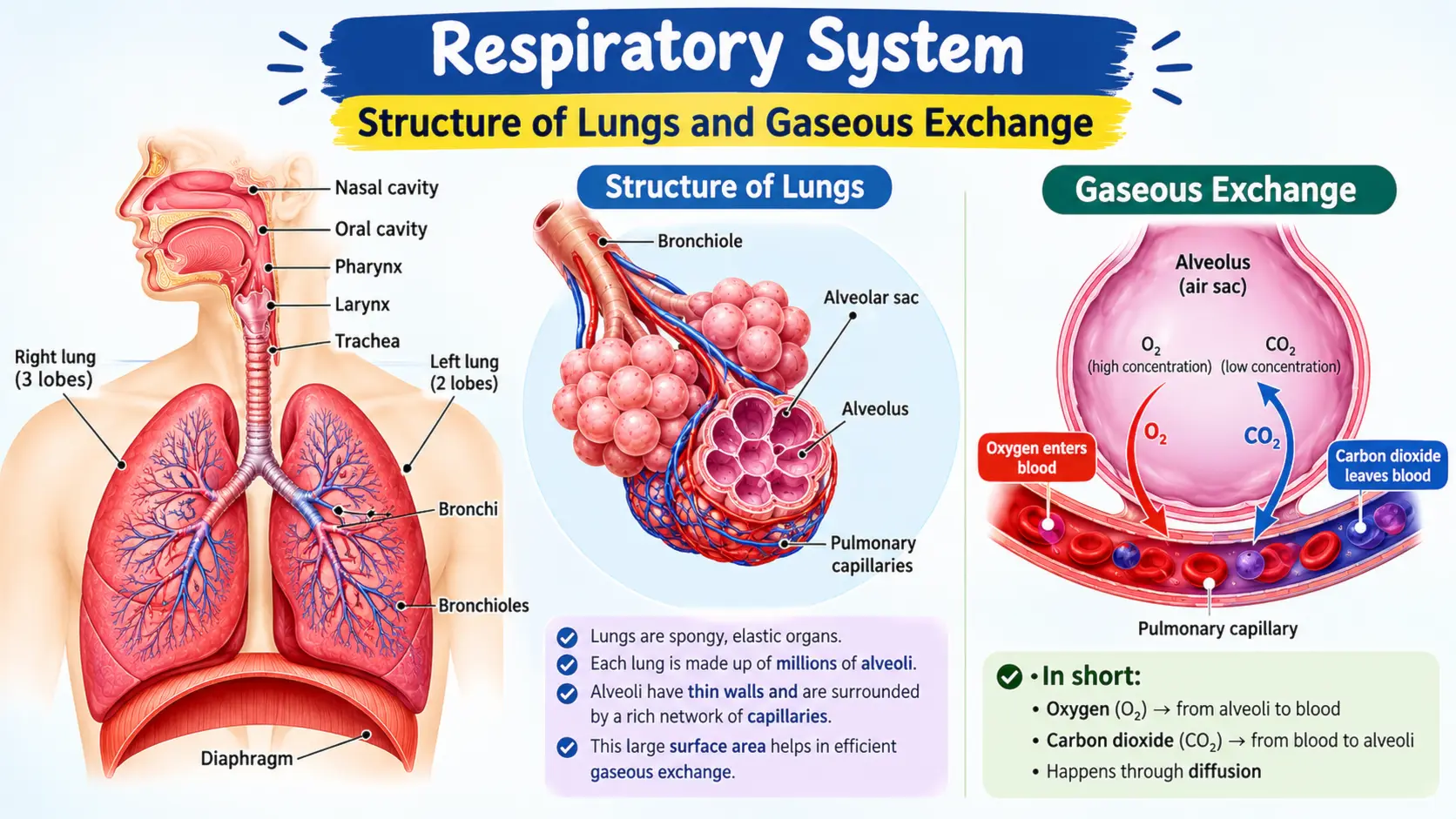
Respiratory System: Structure of Lungs and Gaseous Exchange मानव शरीर का एक महत्वपूर्ण organ system है, जिसका मुख्य कार्य शरीर में oxygen (O₂) पहुंचाना और carbon dioxide (CO₂) को बाहर निकालना है। Oxygen शरीर की cells में energy production के लिए आवश्यक है, जबकि carbon dioxide cellular metabolism के दौरान बनने वाला waste product है। इस process में lungs, respiratory tract, alveoli, blood और respiratory muscles महत्वपूर्ण भूमिका निभाते हैं
Respiratory System: Structure of Lungs and Gaseous Exchange
1. Respiratory System क्या है?
Respiratory System organs और tissues का एक समूह है जो शरीर और वातावरण के बीच gases के exchange में सहायता करता है।
इसके मुख्य कार्य हैं:
📢 Latest Sarkari Updates
Latest Sarkari Jobs, Results, Admit Card aur Current Affairs ki sabse tez update pane ke liye hamara WhatsApp Channel join karein.
🟢 Join WhatsApp Channel100% Free • Daily Updates
- शरीर में Oxygen पहुंचाना।
- Carbon dioxide को शरीर से बाहर निकालना।
- Blood और atmosphere के बीच gaseous exchange में सहायता करना।
- शरीर के acid-base balance को बनाए रखने में सहायता करना।
- Speech के लिए आवश्यक airflow प्रदान करना।
2. Respiratory System के मुख्य अंग
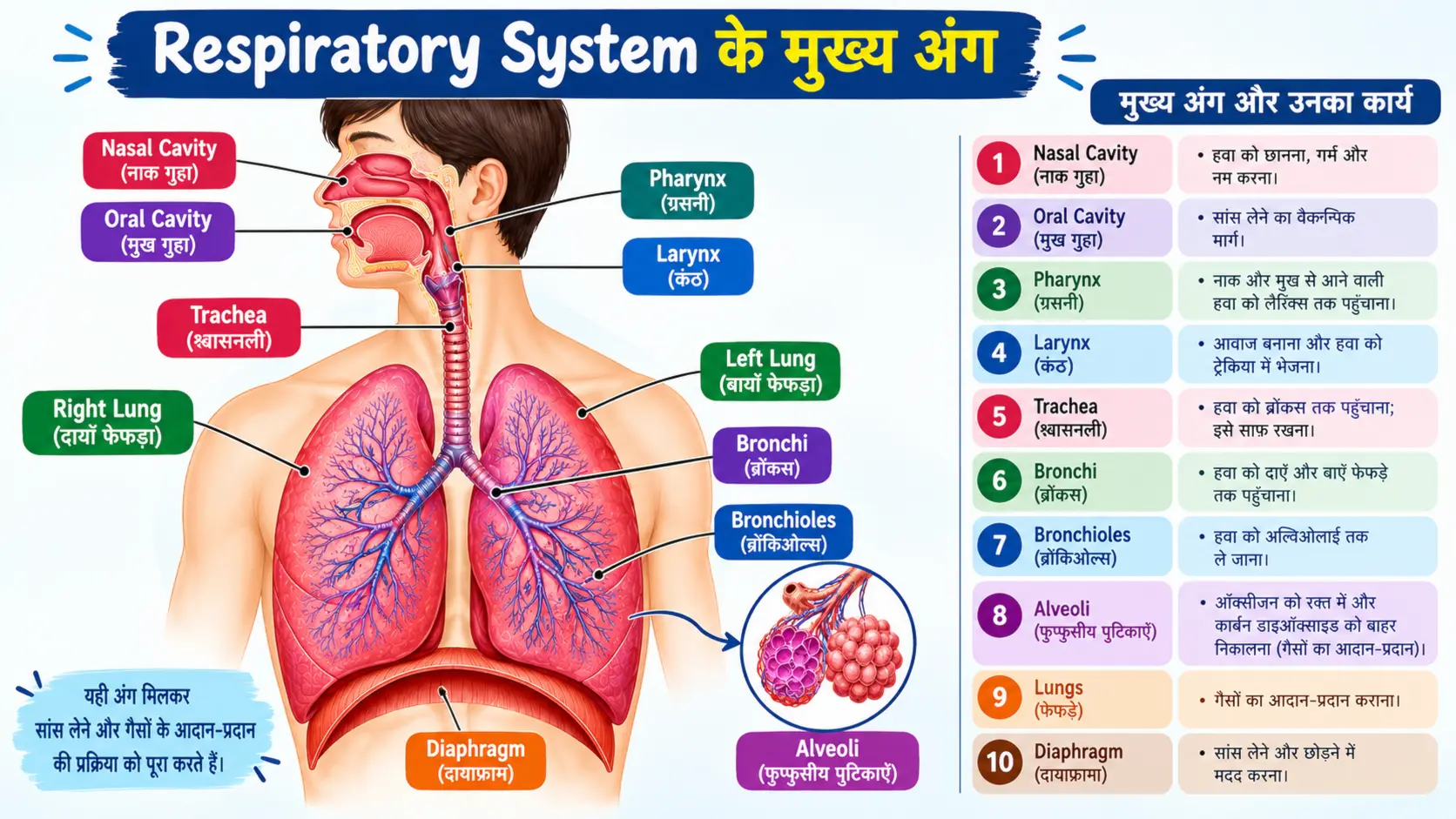
Respiratory System को मुख्य रूप से निम्न भागों में समझा जा सकता है:
| Organ/Part | Main Function |
|---|---|
| Nose & Nasal Cavity | Air को filter, warm और humidify करना |
| Pharynx | Air को larynx तक पहुंचाना |
| Larynx | Air passage और sound production |
| Trachea | Air को bronchi तक पहुंचाना |
| Bronchi | Air को दोनों lungs में पहुंचाना |
| Bronchioles | Air को alveoli तक पहुंचाना |
| Alveoli | मुख्य gaseous exchange |
| Lungs | Respiration और gas exchange का प्रमुख organ |
| Diaphragm | Breathing movements में मुख्य भूमिका |
3. Lungs की Structure
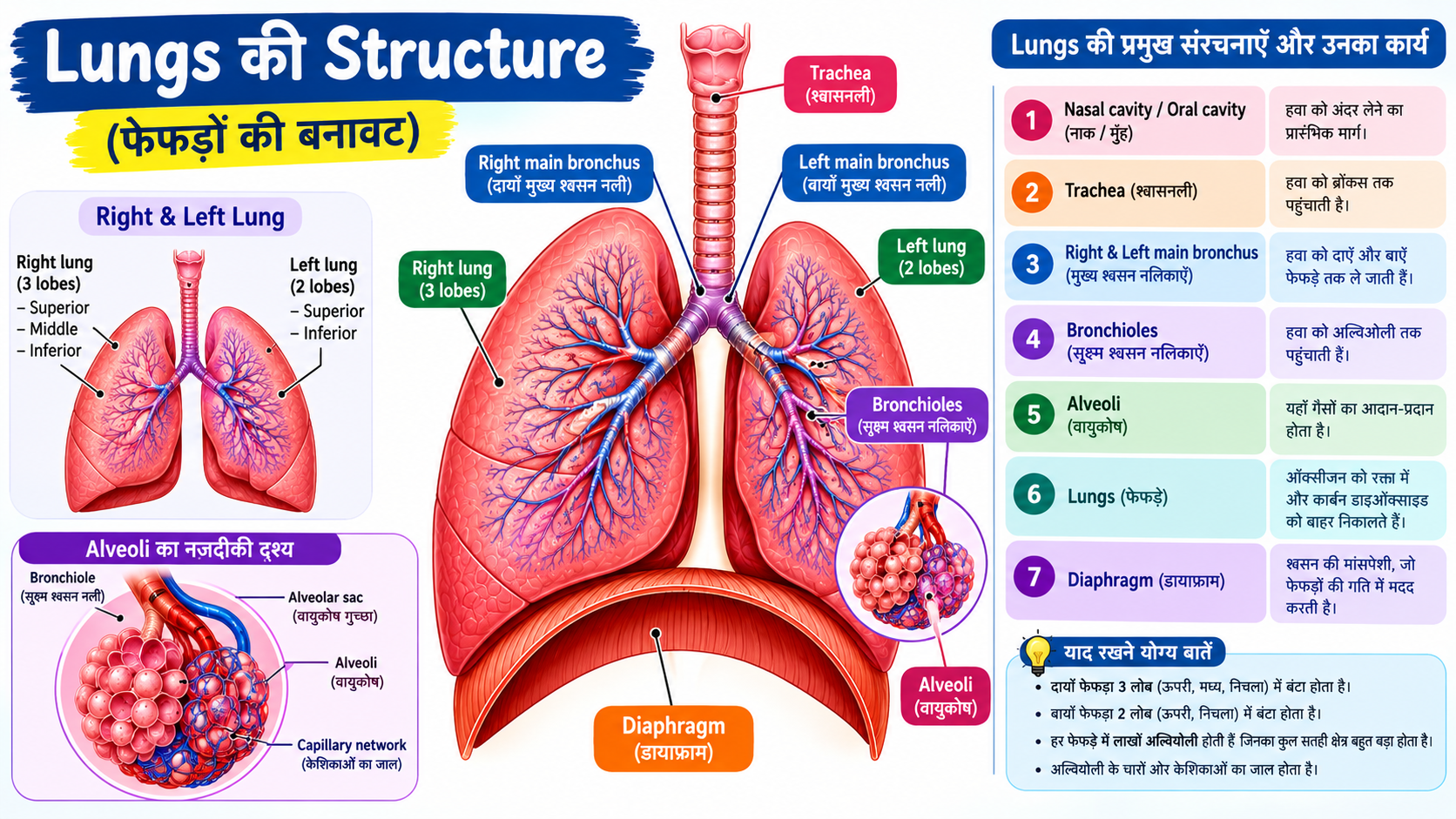
Lungs मानव शरीर के मुख्य respiratory organs हैं। ये thoracic cavity (chest cavity) में स्थित होते हैं।
मानव शरीर में दो lungs होते हैं:
- Right Lung
- Left Lung
दोनों lungs के बीच mediastinum नामक क्षेत्र होता है, जिसमें heart सहित कई महत्वपूर्ण structures स्थित होते हैं।
Right Lung
Right lung सामान्यतः तीन lobes में divided होता है:
- Superior lobe
- Middle lobe
- Inferior lobe
Left Lung
Left lung दो lobes में divided होता है:
- Superior lobe
- Inferior lobe
Left lung में heart के लिए जगह होने के कारण इसमें cardiac notch पाया जाता है।
4. Pleura
Lungs एक protective membrane से covered होते हैं जिसे Pleura कहते हैं।
Pleura की दो layers होती हैं:
| Layer | Description |
|---|---|
| Visceral Pleura | सीधे lung की surface को cover करती है |
| Parietal Pleura | Thoracic cavity की inner wall को line करती है |
इन दोनों layers के बीच pleural cavity होती है, जिसमें थोड़ी मात्रा में pleural fluid होता है।
Pleural Fluid का महत्व
Pleural fluid:
- Lungs और chest wall के बीच friction को कम करता है।
- Breathing के दौरान lungs की smooth movement में सहायता करता है।
5. Bronchial Tree
Trachea नीचे जाकर दो मुख्य bronchi में divide होती है:
- Right Primary Bronchus
- Left Primary Bronchus
ये आगे छोटे branches में divide होते जाते हैं।
Trachea → Primary Bronchi → Smaller Bronchi → Bronchioles → Alveolar Ducts → Alveoli इस branching structure को bronchial tree कहा जाता है।
6. Alveoli – Gaseous Exchange का मुख्य स्थान
Alveoli lungs में मौजूद microscopic air sacs हैं। यही वह मुख्य स्थान है जहां oxygen और carbon dioxide का exchange होता है।
Alveoli की महत्वपूर्ण विशेषताएं:
- इनकी walls बहुत thin होती हैं।
- इनके चारों ओर dense network of blood capillaries होता है।
- Large surface area उपलब्ध कराते हैं।
- Thin respiratory membrane gaseous exchange को आसान बनाती है।
Respiratory Membrane
Alveoli और blood capillary के बीच बहुत thin barrier होता है जिसे respiratory membrane कहा जाता है। Oxygen और carbon dioxide इसी membrane के across diffuse करते हैं।
7. Gaseous Exchange क्या है?
Gaseous exchange वह process है जिसमें: Oxygen alveoli से blood में जाती है और Carbon dioxide blood से alveoli में आती है। यह मुख्यतः diffusion के द्वारा होता है। Gas हमेशा higher partial pressure से lower partial pressure की ओर move करती है।
Alveoli में
- Oxygen का partial pressure relatively अधिक होता है।
- इसलिए Oxygen alveoli से blood में diffuse करती है।
Blood में
- Carbon dioxide का partial pressure relatively अधिक होता है।
- इसलिए Carbon dioxide blood से alveoli में diffuse करती है।
इसके बाद CO₂ exhalation के दौरान lungs से बाहर निकल जाती है।
8. Oxygen का Transport
Blood में oxygen मुख्य रूप से दो forms में transport होती है:
- Haemoglobin के साथ bound form में
- Plasma में dissolved form में
Oxygen का अधिकांश भाग haemoglobin के साथ bind होकर transport होता है।
Oxyhaemoglobin
जब oxygen haemoglobin से bind करती है, तो इसे oxyhaemoglobin कहा जाता है।
Haemoglobin + Oxygen → Oxyhaemoglobin
Lungs में oxygen उपलब्ध होने पर haemoglobin oxygen से bind करता है और tissues तक oxygen पहुंचाता है।
9. Tissues में Oxygen का Release
जब oxygenated blood tissues तक पहुंचता है, तो tissues में oxygen concentration कम होने के कारण haemoglobin से oxygen release होती है। इसके बाद oxygen cells में diffuse होकर cellular respiration में उपयोग होती है। इस process से cells को energy production के लिए oxygen मिलती है।
10. Carbon Dioxide का Transport
Cells में metabolism के दौरान Carbon dioxide बनती है। यह CO₂ tissues से blood में आती है और blood इसे lungs तक transport करता है। Blood में carbon dioxide मुख्य रूप से तीन forms में transport होती है:
| Form | Approximate Proportion |
|---|---|
| Bicarbonate ions (HCO₃⁻) | ~70% |
| Carbaminohaemoglobin | ~20–23% |
| Dissolved in plasma | ~7–10% |
Exam Point: Carbon dioxide का सबसे बड़ा हिस्सा blood में bicarbonate ions के रूप में transport होता है।
11. Bicarbonate Formation
Carbon dioxide red blood cells में प्रवेश करके water के साथ reaction करती है। इस reaction को enzyme carbonic anhydrase तेज करता है।
CO₂ + H₂O ⇌ H₂CO₃ ⇌ H⁺ + HCO₃⁻
यहां:
- CO₂ = Carbon dioxide
- H₂O = Water
- H₂CO₃ = Carbonic acid
- H⁺ = Hydrogen ion
- HCO₃⁻ = Bicarbonate ion
इस प्रकार carbon dioxide का बड़ा हिस्सा bicarbonate के रूप में blood द्वारा transport किया जाता है।
12. Carbaminohaemoglobin
Carbon dioxide का एक हिस्सा haemoglobin के proteins से bind होकर transport होता है। CO₂ जब haemoglobin के globin part से bind करती है, तो Carbaminohaemoglobin बनता है। यह carbon dioxide transport का दूसरा महत्वपूर्ण तरीका है।
13. Dissolved Carbon Dioxide
Carbon dioxide का कुछ हिस्सा सीधे blood plasma में dissolved form में transport होता है। हालांकि इसकी मात्रा bicarbonate के मुकाबले काफी कम होती है।
14. Lungs में Carbon Dioxide का Release
जब blood lungs तक पहुंचता है, तो carbon dioxide blood से alveoli में diffuse करती है। Bicarbonate reactions reverse direction में जाती हैं और CO₂ बनती है।
फिर: CO₂ → Alveoli → Bronchioles → Bronchi → Trachea → Nose/Mouth → बाहर
इस तरह carbon dioxide शरीर से बाहर निकलती है।
15. Breathing में Diaphragm की भूमिका
Diaphragm respiration में सबसे महत्वपूर्ण muscles में से एक है।
Inspiration
जब हम सांस अंदर लेते हैं:
- Diaphragm contracts करता है।
- यह नीचे की ओर move करता है।
- Thoracic cavity का volume बढ़ता है।
- Lung pressure कम होता है।
- Air lungs के अंदर जाती है।
Expiration
जब हम सांस बाहर छोड़ते हैं:
- Diaphragm relax करता है।
- यह ऊपर की ओर move करता है।
- Thoracic cavity का volume कम होता है।
- Lungs से air बाहर निकलती है।
16. Inspiration और Expiration में अंतर
| Feature | Inspiration | Expiration |
|---|---|---|
| Air Movement | Air अंदर जाती है | Air बाहर जाती है |
| Diaphragm | Contracts | Relaxes |
| Diaphragm Movement | नीचे की ओर | ऊपर की ओर |
| Thoracic Volume | बढ़ता है | घटता है |
| Lung Pressure | घटता है | बढ़ता है |
17. Oxygen और Carbon Dioxide Exchange – Simple Flow
18. Exam Point – Quick Revision
| Topic | Important Fact |
|---|---|
| Main Respiratory Organ | Lungs |
| Number of Lungs | Two |
| Right Lung | 3 lobes |
| Left Lung | 2 lobes |
| Gas Exchange Site | Alveoli |
| Main Mechanism of Gas Exchange | Diffusion |
| Oxygen Carrier | Haemoglobin |
| Oxygen + Haemoglobin | Oxyhaemoglobin |
| Major CO₂ Transport Form | Bicarbonate ions |
| CO₂ + Hb | Carbaminohaemoglobin |
| CO₂ Conversion Enzyme | Carbonic anhydrase |
| Main Breathing Muscle | Diaphragm |
| Lung Covering | Pleura |
| Pleura Layers | Visceral & Parietal |
19. Important One-Liners
- Alveoli lungs में gaseous exchange का मुख्य स्थान हैं।
- Oxygen alveoli से blood में diffuse करती है।
- Carbon dioxide blood से alveoli में diffuse करती है।
- Blood में oxygen का अधिकांश भाग haemoglobin के साथ transport होता है।
- Carbon dioxide का अधिकांश भाग bicarbonate ions के रूप में transport होता है।
- Carbonic anhydrase CO₂ और water के बीच reaction को catalyse करता है।
- Right lung में 3 lobes और left lung में 2 lobes होते हैं।
- Lungs को cover करने वाली membrane को pleura कहते हैं।
- Inspiration में diaphragm contract करता है।
- Expiration में diaphragm relax करता है।
Conclusion
Respiratory System शरीर में oxygen की supply और carbon dioxide removal के लिए essential है। Lungs, alveoli, haemoglobin, bicarbonate ions और diaphragm इस पूरी process के प्रमुख components हैं। Exam की दृष्टि से alveoli में gaseous exchange, oxygen transport, CO₂ transport और right तथा left lung की structure सबसे महत्वपूर्ण points हैं।
Respiratory System FAQs
1. Respiratory System का मुख्य कार्य क्या है?
Respiratory System का मुख्य कार्य शरीर में Oxygen पहुंचाना और Carbon dioxide को बाहर निकालना है।
2. मानव शरीर में कितने lungs होते हैं?
मानव शरीर में दो lungs, यानी Right Lung और Left Lung होते हैं।
3. Right Lung में कितने lobes होते हैं?
Right Lung में तीन lobes होते हैं—Superior, Middle और Inferior lobe।
4. Left Lung में कितने lobes होते हैं?
Left Lung में दो lobes होते हैं—Superior और Inferior lobe।
5. Lungs में gaseous exchange कहां होता है?
Gaseous exchange मुख्य रूप से Alveoli में होता है। यहां Oxygen और Carbon dioxide का exchange blood capillaries के साथ होता है।
6. Gaseous exchange किस process द्वारा होता है?
Gaseous exchange मुख्य रूप से diffusion की process द्वारा होता है।
7. Blood में Oxygen किसके साथ transport होती है?
Blood में Oxygen का अधिकांश भाग Haemoglobin के साथ bind होकर transport होता है। Oxygen और haemoglobin के combination को Oxyhaemoglobin कहते हैं।
8. Carbon dioxide blood में किस रूप में सबसे अधिक transport होती है?
Carbon dioxide का सबसे बड़ा हिस्सा Bicarbonate ions (HCO₃⁻) के रूप में transport होता है।
9. Carbonic anhydrase का क्या कार्य है?
Carbonic anhydrase enzyme carbon dioxide और water के बीच होने वाली reaction को तेज करता है, जिससे bicarbonate formation में सहायता मिलती है।
10. Pleura क्या है?
Pleura एक protective membrane है जो lungs को cover करती है। इसकी दो layers होती हैं—Visceral Pleura और Parietal Pleura।
11. Breathing में diaphragm की क्या भूमिका है?
Diaphragm breathing की मुख्य muscle है। Inspiration के दौरान यह contract होकर नीचे जाता है, जबकि expiration के दौरान relax होकर ऊपर आता है।
12. Inspiration और Expiration में क्या अंतर है?
Inspiration में air lungs के अंदर जाती है और diaphragm contract करता है। Expiration में air lungs से बाहर निकलती है और diaphragm relax करता है।
Related Post
- 5 September 2026 Current Affairs in Hindi: आज के महत्वपूर्ण Current Affairs, Exam Points & Important Facts
- Indian Coast Guard CGEPT 01/2027 & 02/2027 Recruitment 2026: 365 पदों के लिए Apply Online शुरू
- Rajasthan SET Answer Key 2026 Out: राजस्थान SET की Answer Key जारी, Direct Link से करें Download
- 4 September 2026 Current Affairs in Hindi: आज के महत्वपूर्ण Current Affairs, Exam Points & Important Facts
- 3 September 2026 Current Affairs Quiz: Important MCQs with Answers & Explanations