
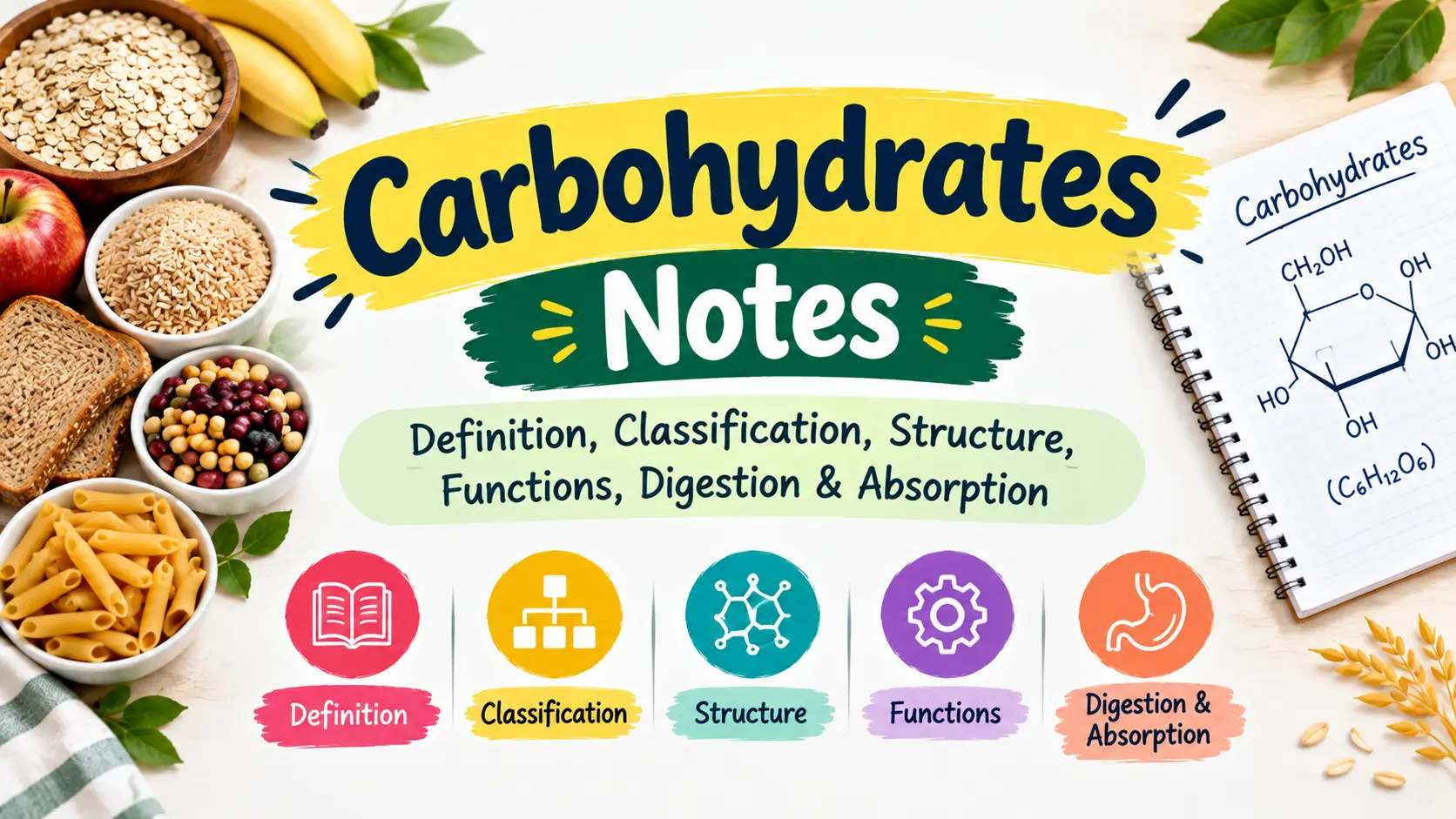
Carbohydrates Notes में definition, classification, monosaccharides, disaccharides, polysaccharides, functions, sources, daily requirement और digestion व absorption आसान भाषा में पढ़ें। और dietetics का एक बहुत important topic है। हमारे daily diet में carbohydrate एक प्रमुख energy-giving nutrient है। यह cereals, grains, fruits, vegetables, pulses, milk और कई दूसरे foods में अलग-अलग forms में पाया जाता है।
इस chapter में Carbohydrates की definition, classification, structure, properties, monosaccharides, disaccharides, polysaccharides, sources, functions, daily requirement, high और low carbohydrate intake के health effects तथा digestion और absorption को आसान भाषा में समझाया गया है।
Carbohydrates Notes
1. Carbohydrates क्या हैं?
Carbohydrates ऐसे organic compounds हैं जिनमें मुख्य रूप से carbon, hydrogen और oxygen पाए जाते हैं। Nutrition में carbohydrates शरीर के लिए मुख्य energy-providing nutrients में से एक हैं।
📢 Latest Sarkari Updates
Latest Sarkari Jobs, Results, Admit Card aur Current Affairs ki sabse tez update pane ke liye hamara WhatsApp Channel join karein.
🟢 Join WhatsApp Channel100% Free • Daily Updates
सामान्य रूप से carbohydrates का basic formula कई simple carbohydrates के लिए Cn(H₂O)n के रूप में लिखा जाता है, हालांकि सभी carbohydrates इस formula को exactly follow नहीं करते।
Diet में मिलने वाले carbohydrates में मुख्य रूप से:
- Sugars
- Starch
- Dextrin
- Glycogen
- Dietary fibre
- Resistant starch
जैसे forms शामिल होते हैं।
आसान भाषा में
Carbohydrate → Body को energy देने वाला प्रमुख nutrient
2. Carbohydrates का Classification
Carbohydrates को उनकी chemical structure और sugar units की संख्या के आधार पर मुख्य रूप से तीन groups में समझा जाता है:
Fructose
Galactose
Lactose
Sucrose
Starch
Glycogen
Resistant Starch
3. Monosaccharides
Monosaccharides carbohydrates की सबसे simple form हैं। इनमें केवल एक sugar unit होती है और इन्हें छोटे carbohydrate units में hydrolyse नहीं किया जा सकता।
Nutrition में important monosaccharides हैं:
- Glucose
- Fructose
- Galactose
3.1 Glucose
Glucose एक important monosaccharide है और body के लिए energy का बहुत important source है।
इसे blood sugar भी कहा जाता है क्योंकि blood में glucose का level body के energy metabolism से closely related होता है।
Glucose के मुख्य points
- Type: Monosaccharide
- मुख्य role: Energy production
- Blood में पाया जाने वाला प्रमुख sugar
- Carbohydrate digestion के बाद बनने वाले important end products में से एक
- Brain और अन्य tissues के लिए important energy source
Sources
Glucose free form में कुछ fruits और foods में पाया जाता है तथा कई complex carbohydrates के digestion से भी glucose मिलता है।
3.2 Fructose
Fructose एक monosaccharide है और इसे commonly fruit sugar कहा जाता है।
Main Points
- Type: Monosaccharide
- Common name: Fruit sugar
- Fruits और honey में पाया जाता है।
- यह naturally occurring sugars का एक important component है।
- Sucrose के hydrolysis से glucose और fructose बनते हैं।
Sources
- Fruits
- Honey
- कुछ vegetables
- Sucrose-containing foods
3.3 Galactose
Galactose एक monosaccharide है। यह free form में कम पाया जाता है और lactose का एक component है।
Lactose = Glucose + Galactose
Main Points
- Type: Monosaccharide
- Lactose का component
- Milk और dairy products से मिलने वाले lactose के digestion में galactose बनता है।
Monosaccharides – Quick Comparison
| Monosaccharide | Common Association | Important Source/Relation |
|---|---|---|
| Glucose | Blood sugar | Fruits, honey, digestion of carbohydrates |
| Fructose | Fruit sugar | Fruits, honey |
| Galactose | Milk sugar component | Formed from lactose digestion |
4. Disaccharides
Disaccharides में दो monosaccharide units आपस में जुड़ी होती हैं। Digestion के दौरान disaccharides टूटकर monosaccharides में बदलते हैं ताकि उनका absorption हो सके।
मुख्य disaccharides:
- Maltose
- Lactose
- Sucrose
4.1 Maltose
Maltose को commonly malt sugar कहा जाता है। यह दो glucose units से मिलकर बनता है।
Maltose = Glucose + Glucose
Starch digestion के दौरान maltose intermediate product के रूप में बन सकता है।
Main Points
- Type: Disaccharide
- Components: Glucose + Glucose
- Starch digestion से बन सकता है।
4.1 Maltose
Maltose को commonly malt sugar कहा जाता है। यह दो glucose units से मिलकर बनता है।
Maltose = Glucose + Glucose
Starch digestion के दौरान maltose intermediate product के रूप में बन सकता है।
Main Points
- Type: Disaccharide
- Components: Glucose + Glucose
- Starch digestion से बन सकता है।
4.2 Lactose
Lactose को milk sugar कहा जाता है। यह milk और dairy products में पाया जाने वाला प्रमुख sugar है।
Lactose = Glucose + Galactose
Lactose digestion के लिए enzyme lactase आवश्यक है।
Main Points
- Type: Disaccharide
- Common name: Milk sugar
- Components: Glucose + Galactose
- Main source: Milk and dairy products
- Enzyme: Lactase
4.3 Sucrose
Sucrose को commonly table sugar कहा जाता है। यह दो monosaccharides से मिलकर बनता है:
Sucrose = Glucose + Fructose
Main Sources
- Sugarcane
- Sugar beet
- Table sugar
- कई sweet foods
Disaccharides का Comparison
| Disaccharide | Components | Common Name | Major Source/Relation |
|---|---|---|---|
| Maltose | Glucose + Glucose | Malt sugar | Starch digestion |
| Lactose | Glucose + Galactose | Milk sugar | Milk |
| Sucrose | Glucose + Fructose | Table sugar | Sugarcane, sugar beet |
याद रखने की Trick
Maltose → G + G
Lactose → G + G(a)
Sucrose → G + F
5. Polysaccharides
Polysaccharides में बहुत सारी monosaccharide units आपस में जुड़ी होती हैं। ये generally complex carbohydrates होते हैं।
इस topic में important polysaccharides हैं:
- Dextrin
- Starch
- Glycogen
- Resistant starch
5.1 Dextrin
Dextrins starch के partial breakdown से बनने वाले carbohydrate products हैं। जब starch digestion या processing के दौरान टूटता है तो intermediate products के रूप में dextrins बन सकते हैं।
Important Points
- Complex carbohydrate breakdown product
- Starch के partial hydrolysis से बन सकता है।
- Digestion के दौरान starch → dextrins → smaller sugars की दिशा में breakdown होता है।
5.2 Starch
Starch plants में carbohydrate का प्रमुख storage form है। यह human diet में complex carbohydrate का एक important source है।
Major Sources
- Rice
- Wheat
- Maize
- Potato
- Cereals
- Pulses
Starch के मुख्य components
Starch मुख्य रूप से दो components से बना होता है:
- Amylose
- Amylopectin
| Component | Structure |
|---|---|
| Amylose | Mainly linear glucose chains |
| Amylopectin | Branched glucose chains |
Important Point
Plant storage carbohydrate → Starch
5.3 Glycogen
Glycogen को animals में carbohydrate का मुख्य storage form माना जाता है।
Human body में glycogen मुख्य रूप से:
- Liver
- Skeletal muscles
में stored रहता है।
Liver Glycogen
Liver glycogen blood glucose को maintain करने में important role निभाता है।
Muscle Glycogen
Muscle glycogen mainly muscle activity और energy requirement के लिए इस्तेमाल होता है।
Important Point
Animal storage carbohydrate → Glycogen
5.4 Resistant Starch
Resistant starch ऐसा starch है जो small intestine में सामान्य digestion से पूरी तरह digest नहीं होता और large intestine तक पहुंच सकता है। Large intestine में इसका कुछ हिस्सा gut microorganisms द्वारा fermented हो सकता है।
Resistant Starch के Sources
- कुछ whole grains
- Legumes
- Green/less-ripe banana
- Cooked and cooled potatoes/rice में बनने वाला retrograded starch
Important Point
Resistant starch का behaviour dietary fibre के कुछ effects के समान हो सकता है क्योंकि यह small intestine में पूरी तरह digest नहीं होता।
Polysaccharides – Comparison
| Polysaccharide | Main Association | Important Point |
|---|---|---|
| Dextrin | Starch breakdown | Partial breakdown product |
| Starch | Plants | Main plant storage carbohydrate |
| Glycogen | Animals | Main animal storage carbohydrate |
| Resistant Starch | Small intestine | Not completely digested in small intestine |
6. Structure के आधार पर Carbohydrates
Carbohydrate structure को simple तरीके से ऐसे समझ सकते हैं:
combines
many units combine
7. Carbohydrates की Important Properties
Carbohydrates की properties उनकी structure और type पर depend करती हैं।
7.1 Solubility
Simple sugars जैसे glucose और fructose generally water में soluble होते हैं। Complex carbohydrates जैसे starch की solubility अलग होती है और यह simple sugars की तरह आसानी से dissolve नहीं होता।
7.2 Sweet Taste
Simple sugars generally sweet taste देते हैं। Fructose बहुत sweet natural sugars में से एक है। लेकिन सभी carbohydrates sweet नहीं होते। Starch और glycogen जैसे polysaccharides में सामान्यतः sweet taste नहीं होता।
7.3 Energy Value
Digestible carbohydrates body को लगभग: 4 kcal per gram energy provide करते हैं।
7.4 Digestion
Complex carbohydrates digestion के दौरान छोटे carbohydrate units में टूटते हैं।
7.5 Storage
Body extra glucose को मुख्य रूप से glycogen के रूप में store कर सकती है।
8. Carbohydrates के Sources
Carbohydrates plant foods में large amounts में पाए जाते हैं।
Major Sources
| Food Group | Examples |
|---|---|
| Cereals | Rice, Wheat, Maize, Oats |
| Millets | Ragi, Bajra, Jowar |
| Roots & Tubers | Potato, Sweet potato |
| Pulses | Chickpea, Lentils, Beans |
| Fruits | Banana, Apple, Mango |
| Vegetables | Corn, Peas, Root vegetables |
| Sugars | Sugar, Jaggery |
| Dairy | Milk contains lactose |
Simple vs Complex Sources
Simple carbohydrate sources:
- Sugar
- Honey
- Fruits
- Sweet foods
- Milk sugar
Complex carbohydrate sources:
- Whole grains
- Cereals
- Millets
- Pulses
- Potatoes
- Legumes
9. Functions of Carbohydrates
Carbohydrates का सबसे important function energy provide करना है, लेकिन इसके अलावा भी कई functions हैं।
9.1 Energy Supply
Carbohydrates body को energy provide करते हैं। 1 gram carbohydrate ≈ 4 kcal यह physical activity और daily body functions के लिए energy प्रदान करता है।
9.2 Protein-Sparing Action
जब diet में sufficient carbohydrate उपलब्ध होता है, तो body protein को energy के लिए इस्तेमाल करने की बजाय growth और tissue repair जैसे functions के लिए बचा सकती है। इसे protein-sparing action कहते हैं।
9.3 Fat Metabolism में Role
Adequate carbohydrate availability normal fat metabolism में मदद करती है। बहुत कम carbohydrate availability में fat breakdown बढ़ सकता है और ketone bodies का formation बढ़ सकता है।
9.4 Glycogen Storage
Carbohydrate से बनने वाला glucose body में glycogen के रूप में store किया जा सकता है।
मुख्य storage sites:
- Liver
- Muscles
9.5 Brain के लिए Energy
Glucose सामान्य परिस्थितियों में brain के लिए एक important energy source है।
9.6 Dietary Fibre के रूप में Role
कुछ carbohydrates dietary fibre का हिस्सा होते हैं।
Dietary fibre:
- Bowel movement में मदद कर सकता है।
- Stool bulk बढ़ा सकता है।
- Digestive health के लिए useful है।
9.7 Intestinal Health
कुछ nondigestible carbohydrates और resistant starch large intestine तक पहुंचकर gut microbiota द्वारा ferment हो सकते हैं और short-chain fatty acids जैसे fermentation products बनने में योगदान कर सकते हैं।
10. Daily Requirement of Carbohydrates
Carbohydrate requirement व्यक्ति की:
- Age
- Sex
- Physical activity
- Total energy requirement
- Physiological condition
- Health status
पर depend करती है। एक सामान्य adult diet में carbohydrate total daily energy का लगभग 45–65% provide कर सकता है।
Example
अगर किसी व्यक्ति की daily energy requirement 2000 kcal है और 50% energy carbohydrate से आती है: 2000 × 50/100 = 1000 kcal Carbohydrate से मिलने वाली 1000 kcal को 4 kcal/g से divide करने पर: 1000 ÷ 4 = 250 g carbohydrate/day यह केवल calculation का example है। Actual requirement individual energy needs और dietary pattern के अनुसार बदल सकती है।
11. बहुत अधिक Carbohydrates लेने के Effects
अगर carbohydrate intake लगातार शरीर की energy requirement से काफी अधिक हो और overall calorie intake भी अधिक हो, तो health पर negative effects हो सकते हैं।
Possible Effects
- Excess calorie intake
- Weight gain
- Body fat accumulation
- Blood glucose control में problems
- High intake of added sugars से dental caries का risk बढ़ सकता है।
- Diet quality खराब हो सकती है अगर nutritious foods की जगह बहुत ज्यादा refined/sugary foods ले लिए जाएं।
खासकर Added Sugar
बहुत अधिक:
- Soft drinks
- Sugary beverages
- Sweets
- Cakes
- Biscuits
- Candy
जैसे foods लेने से diet में added sugar और calories बढ़ सकती हैं।
12. बहुत कम Carbohydrates लेने के Effects
अगर carbohydrate intake बहुत कम हो जाए, तो body को energy के लिए alternative fuel sources का ज्यादा उपयोग करना पड़ सकता है।
Possible Effects
- Low energy
- Fatigue
- Weakness
- Exercise performance में कमी
- Protein का energy के लिए अधिक उपयोग
- Fat breakdown बढ़ना
- Ketone bodies का formation बढ़ना
- कुछ लोगों में concentration या mood-related problems
बहुत restrictive carbohydrate diets में fibre-rich foods, fruits, whole grains और कुछ micronutrient sources की intake भी कम हो सकती है, depending on food choices.
13. High vs Low Carbohydrate Intake
| High Carbohydrate Intake | Low Carbohydrate Intake |
|---|---|
| Excess calories होने पर weight gain हो सकता है | Energy कम महसूस हो सकती है |
| Added sugar अधिक होने पर diet quality प्रभावित हो सकती है | Fat breakdown बढ़ सकता है |
| Blood glucose control प्रभावित हो सकता है | Ketone production बढ़ सकती है |
| Dental caries risk बढ़ सकता है, especially frequent sugary foods के साथ | Protein का energy के लिए उपयोग बढ़ सकता है |
| Refined carbohydrate-heavy diet nutrient-poor हो सकती है | Fibre और micronutrient intake कम हो सकती है, अगर food choices limited हों |
14. Digestion of Carbohydrates
Carbohydrate digestion का main purpose complex carbohydrates और disaccharides को छोटे absorbable units, mainly monosaccharides, में बदलना है।
Digestion Flowchart
Carbohydrate Fragments
15. Mouth में Carbohydrate Digestion
Carbohydrate digestion mouth से शुरू होती है। Saliva में मौजूद enzyme: Salivary amylase starch पर काम करना शुरू करता है। यह starch को smaller carbohydrate molecules में break करने में मदद करता है। लेकिन mouth में digestion बहुत लंबे समय तक नहीं होता क्योंकि food जल्दी stomach में चला जाता है।
16. Stomach में Carbohydrate Digestion
Stomach में acidic environment होता है। इस acidic environment के कारण salivary amylase की activity धीरे-धीरे रुक जाती है। इसलिए stomach carbohydrate digestion का major site नहीं है।
17. Small Intestine में Carbohydrate Digestion
Carbohydrate digestion का major part small intestine में होता है।
Pancreas से आने वाला: Pancreatic amylase
starch और अन्य digestible complex carbohydrates को छोटे carbohydrate units में break करने में मदद करता है। इसके बाद intestinal brush border enzymes disaccharides को monosaccharides में convert करते हैं।
18. Brush Border Enzymes
Small intestine की intestinal cells की brush border पर कई enzymes होते हैं।
Important enzymes:
| Enzyme | Substrate | Products |
|---|---|---|
| Maltase | Maltose | Glucose + Glucose |
| Lactase | Lactose | Glucose + Galactose |
| Sucrase | Sucrose | Glucose + Fructose |
इस process के बाद carbohydrates mainly monosaccharides के रूप में absorption के लिए available होते हैं।
19. Carbohydrate Digestion – Complete Flow
20. Absorption of Carbohydrates
Carbohydrates mainly monosaccharides के रूप में small intestine से absorb होते हैं।
मुख्य absorbable sugars:
- Glucose
- Fructose
- Galactose
Absorption Flowchart
21. Glucose और Galactose का Absorption
Glucose और galactose intestinal epithelial cells में active transport mechanism से absorb होते हैं।
एक important transporter है: SGLT1
यह sodium के साथ glucose और galactose के uptake में role निभाता है। इसके बाद ये sugars blood में जाने के लिए GLUT2 के माध्यम से बाहर निकल सकते हैं।
22. Fructose का Absorption
Fructose का intestinal absorption मुख्य रूप से facilitated transport के माध्यम से होता है।
Important transporter: GLUT5 इसके बाद fructose intestinal cells से blood में GLUT2 के माध्यम से जा सकता है।
23. Absorption के बाद क्या होता है?
Absorbed monosaccharides blood के माध्यम से liver तक पहुंचते हैं।
इसके बाद body उन्हें:
- Energy production
- Glycogen storage
- Other metabolic pathways
के लिए use कर सकती है।
Complete Process
24. Carbohydrates के Important Terms
| Term | Meaning |
|---|---|
| Monosaccharide | One sugar unit |
| Disaccharide | Two sugar units |
| Polysaccharide | Many sugar units |
| Glucose | Important monosaccharide and blood sugar |
| Fructose | Fruit sugar |
| Galactose | Component of lactose |
| Maltose | Glucose + Glucose |
| Lactose | Glucose + Galactose |
| Sucrose | Glucose + Fructose |
| Starch | Main plant storage carbohydrate |
| Glycogen | Main animal storage carbohydrate |
| Resistant Starch | Starch not completely digested in small intestine |
| Amylase | Enzyme involved in starch digestion |
| Lactase | Enzyme that digests lactose |
| Maltase | Enzyme that digests maltose |
| Sucrase | Enzyme that digests sucrose |
25. Important Differences
Starch vs Glycogen
| Starch | Glycogen |
|---|---|
| Plant storage carbohydrate | Animal storage carbohydrate |
| Plants में stored | Liver और muscles में stored |
| Glucose units से बना | Glucose units से बना |
| Plant foods का important carbohydrate | Body का storage carbohydrate |
Simple vs Complex Carbohydrates
| Simple Carbohydrates | Complex Carbohydrates |
|---|---|
| Smaller sugar units | Larger carbohydrate structures |
| Monosaccharides/disaccharides include होते हैं | Polysaccharides include होते हैं |
| Examples: glucose, fructose, sucrose | Examples: starch, glycogen |
| Many are sweet | Generally not sweet |
26. Exam में याद रखने वाले Important Points
- Carbohydrates major energy-giving nutrients में से एक हैं।
- 1 g carbohydrate ≈ 4 kcal energy देता है।
- Glucose एक monosaccharide है।
- Fructose को fruit sugar कहा जाता है।
- Galactose lactose का component है।
- Maltose = Glucose + Glucose.
- Lactose = Glucose + Galactose.
- Sucrose = Glucose + Fructose.
- Starch plants का major storage carbohydrate है।
- Glycogen animals का major storage carbohydrate है।
- Liver और muscles glycogen storage के important sites हैं।
- Resistant starch small intestine में पूरी तरह digest नहीं होता।
- Carbohydrate digestion mouth में शुरू होती है।
- Salivary amylase starch digestion शुरू करता है।
- Small intestine carbohydrate digestion का major site है।
- Pancreatic amylase starch breakdown में important है।
- Lactase lactose को glucose और galactose में break करता है।
- Maltase maltose को glucose में break करता है।
- Sucrase sucrose को glucose और fructose में break करता है।
- Absorption mainly monosaccharides के रूप में होता है।
- Glucose और galactose के absorption में SGLT1 important है।
- Fructose absorption में GLUT5 important है।
27. Quick Revision Flowchart
Fructose
Galactose
Lactose
Sucrose
Starch
Glycogen
Resistant Starch
28. One-Minute Revision
Monosaccharides:
Glucose + Fructose + Galactose
Disaccharides:
Maltose + Lactose + Sucrose
Maltose:
Glucose + Glucose
Lactose:
Glucose + Galactose
Sucrose:
Glucose + Fructose
Polysaccharides:
Dextrin + Starch + Glycogen + Resistant Starch
Plant storage carbohydrate:
Starch
Animal storage carbohydrate:
Glycogen
Main energy value:
4 kcal/g
Main digestion site:
Small intestine
Starch-digesting enzymes:
Salivary amylase + Pancreatic amylase
Final absorbable forms:
Glucose + Fructose + Galactose
FAQs – Carbohydrates
Q1. Carbohydrates क्या हैं?
Carbohydrates organic compounds हैं जिनमें मुख्य रूप से carbon, hydrogen और oxygen पाए जाते हैं और ये body के लिए important energy-providing nutrients हैं।
Q2. Carbohydrates कितने प्रकार के होते हैं?
Basic classification के अनुसार carbohydrates को monosaccharides, disaccharides और polysaccharides में बांटा जाता है।
Q3. तीन important monosaccharides कौन से हैं?
Glucose, fructose और galactose।
Q4. तीन important disaccharides कौन से हैं?
Maltose, lactose और sucrose।
Q5. Lactose किन sugars से बना है?
Lactose = Glucose + Galactose.
Q6. Sucrose किन sugars से बना है?
Sucrose = Glucose + Fructose.
Q7. Plants में carbohydrate का storage form क्या है?
Starch.
Q8. Animals में carbohydrate का storage form क्या है?
Glycogen.
Q9. Carbohydrate digestion कहाँ से शुरू होती है?
Carbohydrate digestion mouth में salivary amylase की action से शुरू होती है।
Q10. Carbohydrate digestion का major site कौन सा है?
Small intestine.
Q11. Carbohydrates किस form में absorb होते हैं?
मुख्य रूप से monosaccharides के रूप में—glucose, fructose और galactose।
Q12. 1 gram carbohydrate कितनी energy देता है?
लगभग 4 kcal।
Conclusion
Carbohydrates nutrition और dietetics का एक basic लेकिन बहुत important topic है। इसके classification को समझने के लिए सबसे पहले monosaccharides, disaccharides और polysaccharides का difference याद रखना चाहिए।
इसके बाद important combinations जैसे Maltose = Glucose + Glucose, Lactose = Glucose + Galactose और Sucrose = Glucose + Fructose को याद करना exam के लिए काफी useful है।
Carbohydrates body को energy देने के साथ-साथ glycogen storage, protein-sparing action, fat metabolism और dietary fibre-related functions में भी role निभाते हैं। इनके digestion में amylase और brush-border enzymes important होते हैं और absorption मुख्य रूप से monosaccharides के रूप में small intestine से होता है।
Quick formula: Carbohydrate → Digestion → Monosaccharides → Absorption → Blood → Energy/Storage